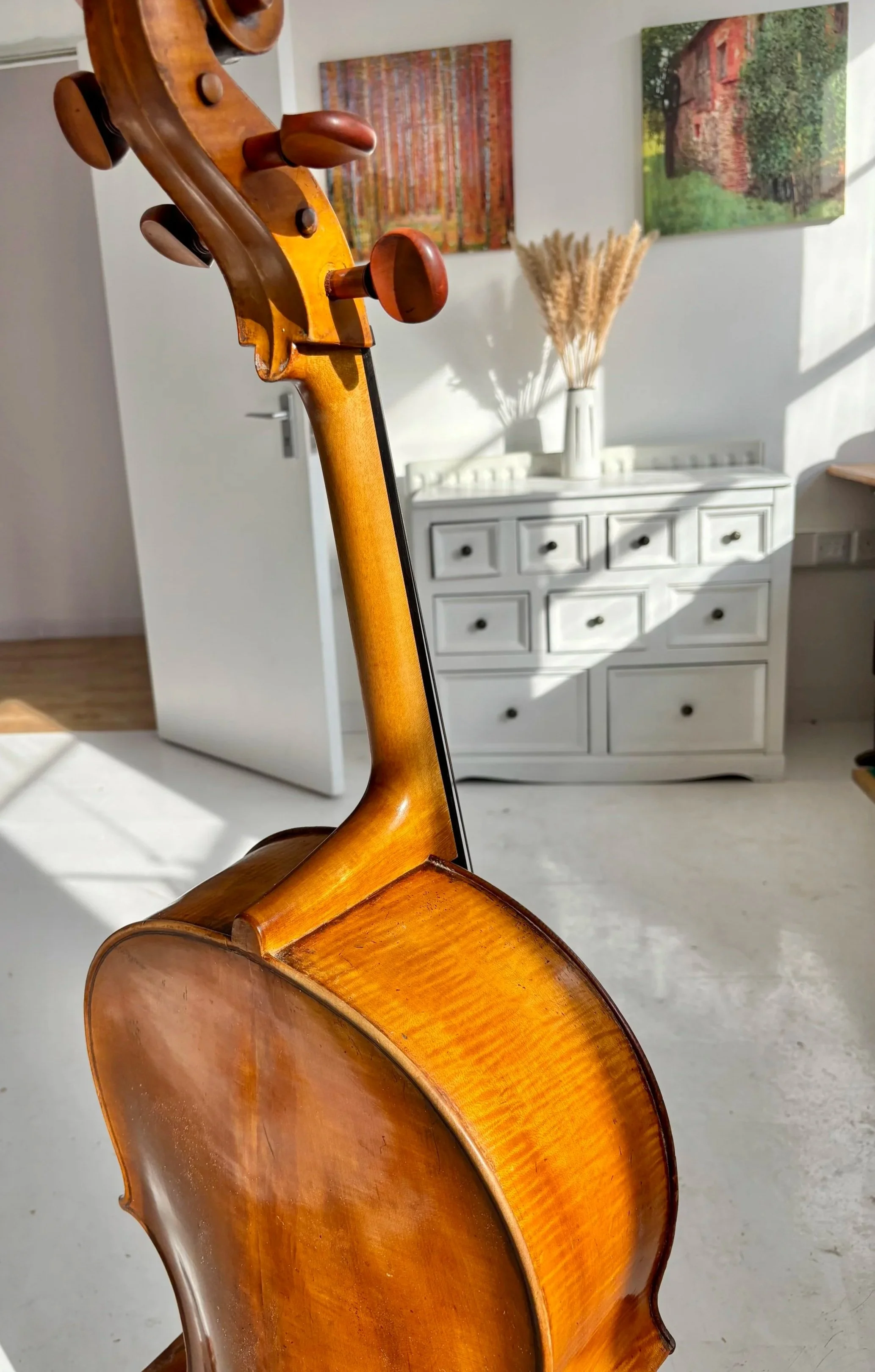
Cello Neck Graft
An advanced restoration preserving the original scroll of a cello whilst replacing the neck.
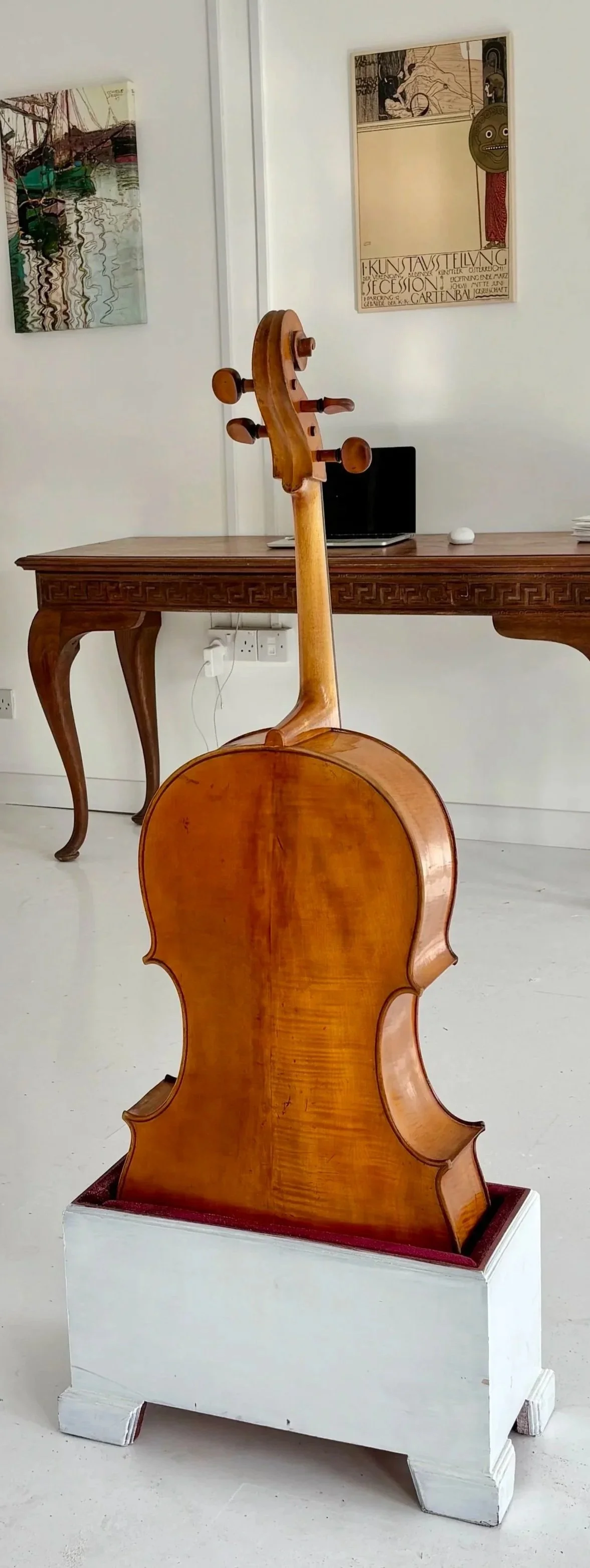
A cello neck graft is one of the more substantial and technically demanding repairs carried out in a violin making workshop. Rather than replacing the complete neck and scroll, the original scroll and pegbox are carefully preserved and grafted onto a new piece of maple. The new wood then forms the neck itself and is fitted back into the body of the cello.
This allows an important and characteristic part of an old instrument — its original scroll — to remain intact, whilst the neck can be restored to the correct dimensions, strength and playing position. On fine old cellos, a well-executed neck graft is a normal part of restoration and can allow an instrument to continue being played for generations.
Why does a cello need a neck graft?
There are several reasons why a cello may require a new neck.
One of the most common is accidental damage. The size and weight of a cello mean that if it falls forwards or backwards, considerable leverage can be placed on the neck. A break through the heel or neck can be severe enough that simply gluing the damaged wood back together would not provide a sufficiently secure long-term repair.
A graft may also be necessary because of:
A previously broken or badly repaired neck
Incorrect neck dimensions
An unsuitable neck angle or alignment
Serious damage to the neck wood
Woodworm or deterioration
An earlier neck graft which has failed
Historical alterations to an antique instrument
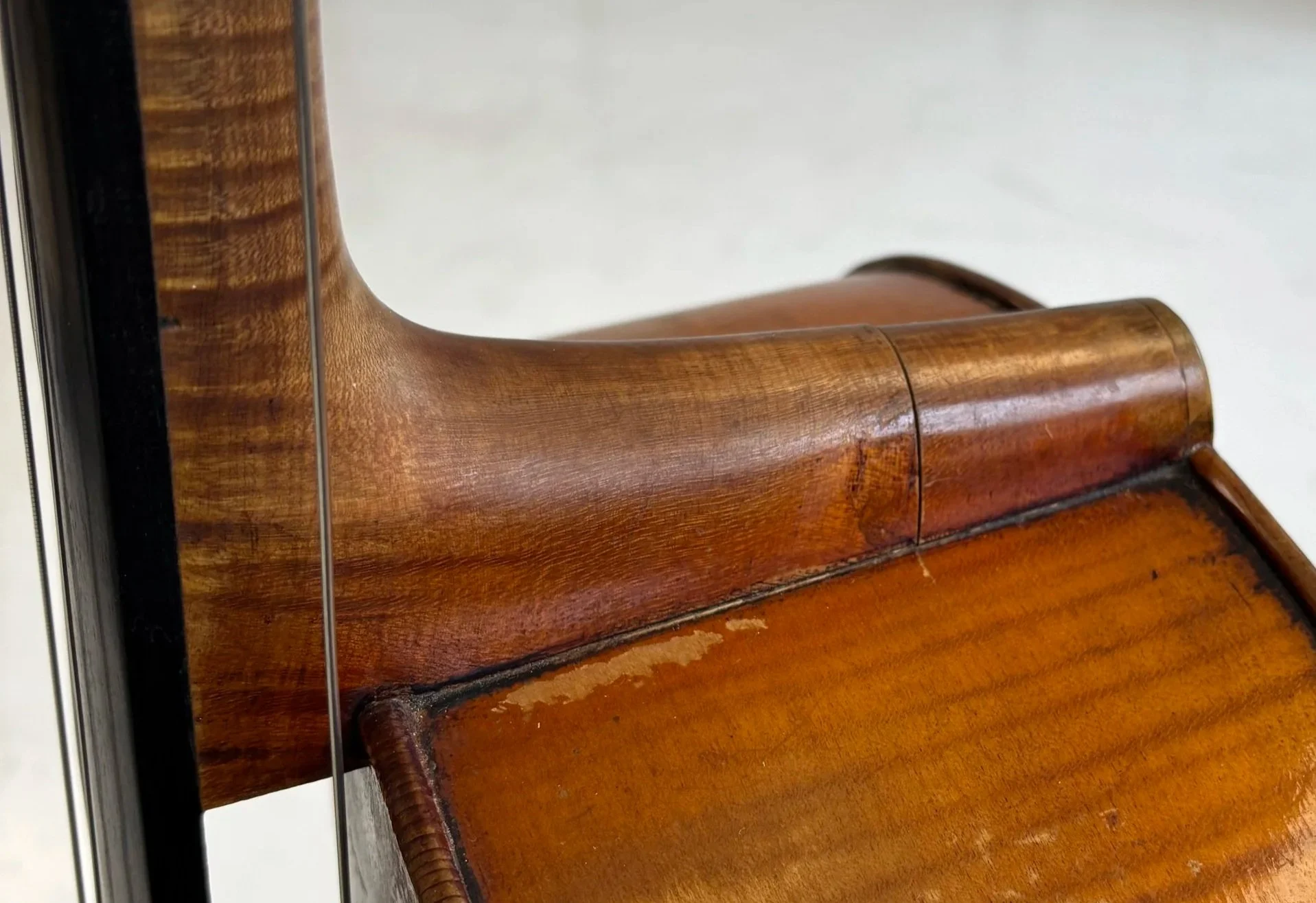
Above: A cello neck broken at the root
Many old cellos have also been altered during their lives as playing styles and modern set-up developed. In these cases, replacing the neck while retaining the original scroll allows the instrument to be brought to appropriate modern playing dimensions without unnecessarily sacrificing an important piece of the original maker's work.
Why keep the original cello scroll?
The scroll is one of the most individual parts of a cello.
It often carries many of the characteristics associated with the maker — the shape of the volutes, the chamfers, the turns of the scroll, the pegbox and even small tool marks left during its construction.
For this reason, the aim of restoration is normally to preserve as much original material as possible. A neck graft allows us to retain the original pegbox and scroll rather than making a completely new replacement.
The join between old and new wood is carefully designed so that the new neck becomes structurally connected to the original scroll whilst removing only the material necessary to create a secure joint.
Making a cello neck graft
Before beginning the repair, the cello is carefully assessed and its existing measurements recorded.
The relationship between the body, neck, fingerboard and bridge is extremely important. The neck length, alignment, projection and position of the fingerboard all contribute to how comfortable the cello is to play and how the strings interact with the bridge and body.
The old neck can then be removed from the instrument and the original scroll separated from the damaged or unsuitable neck wood.
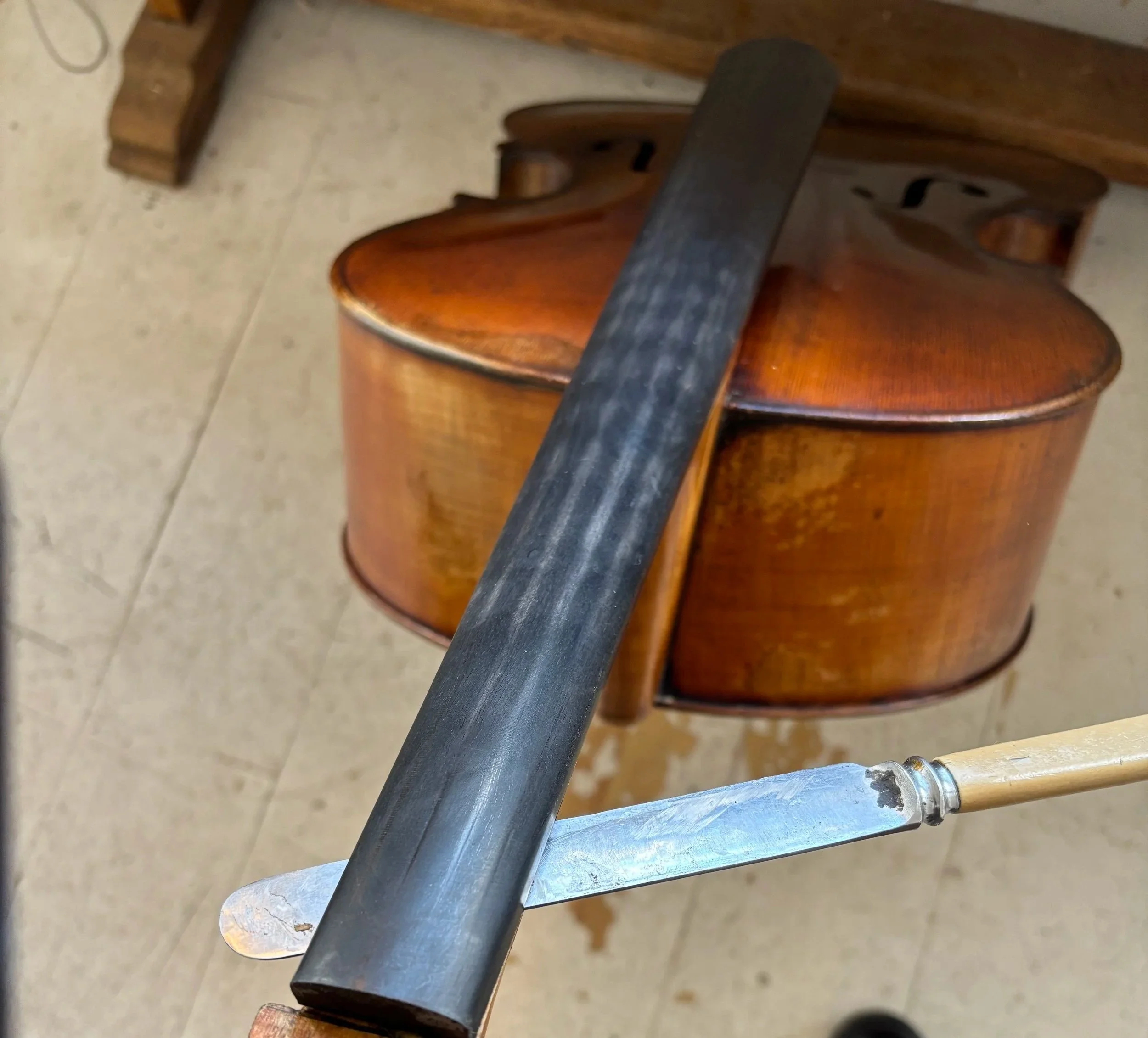
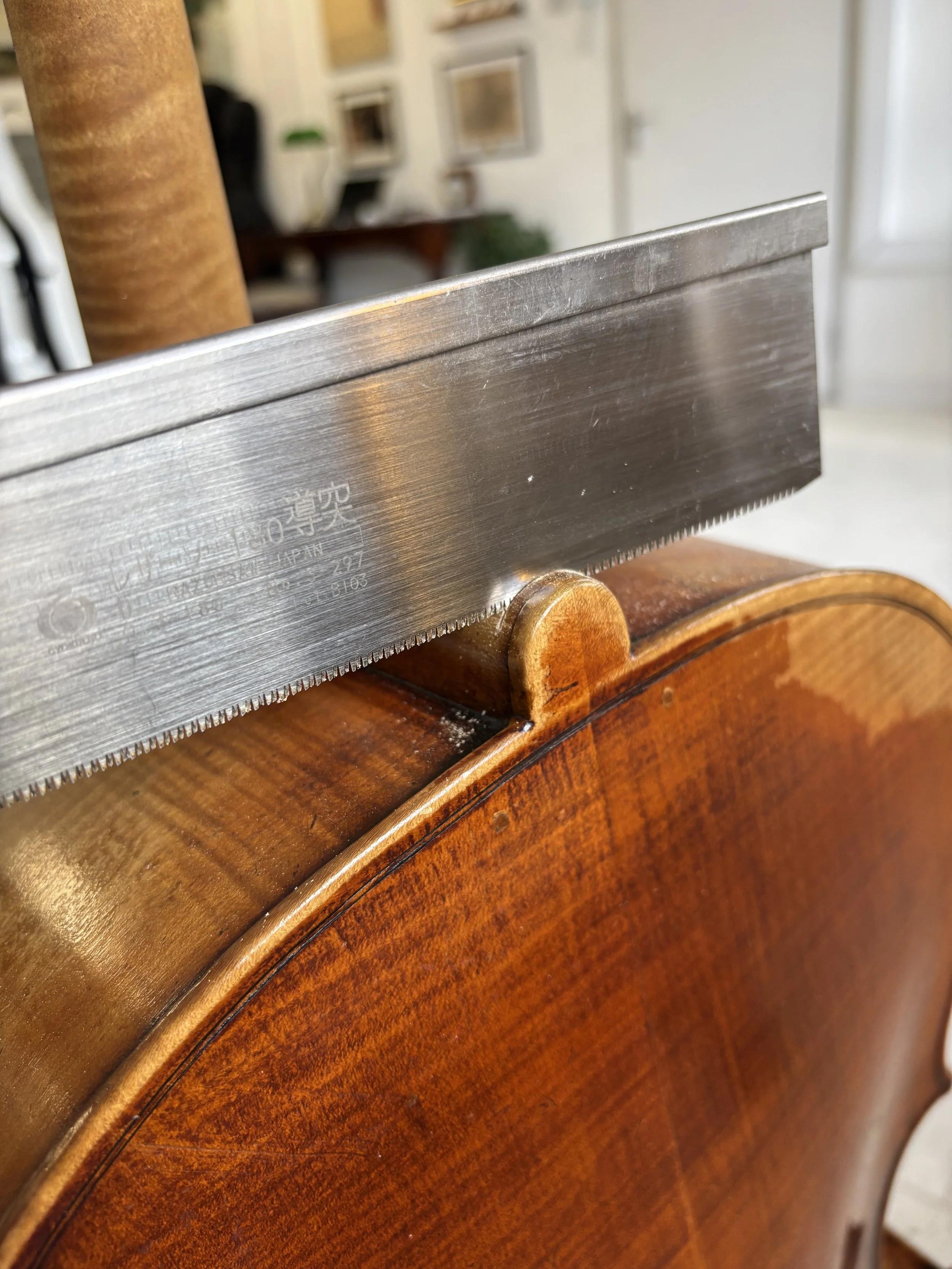
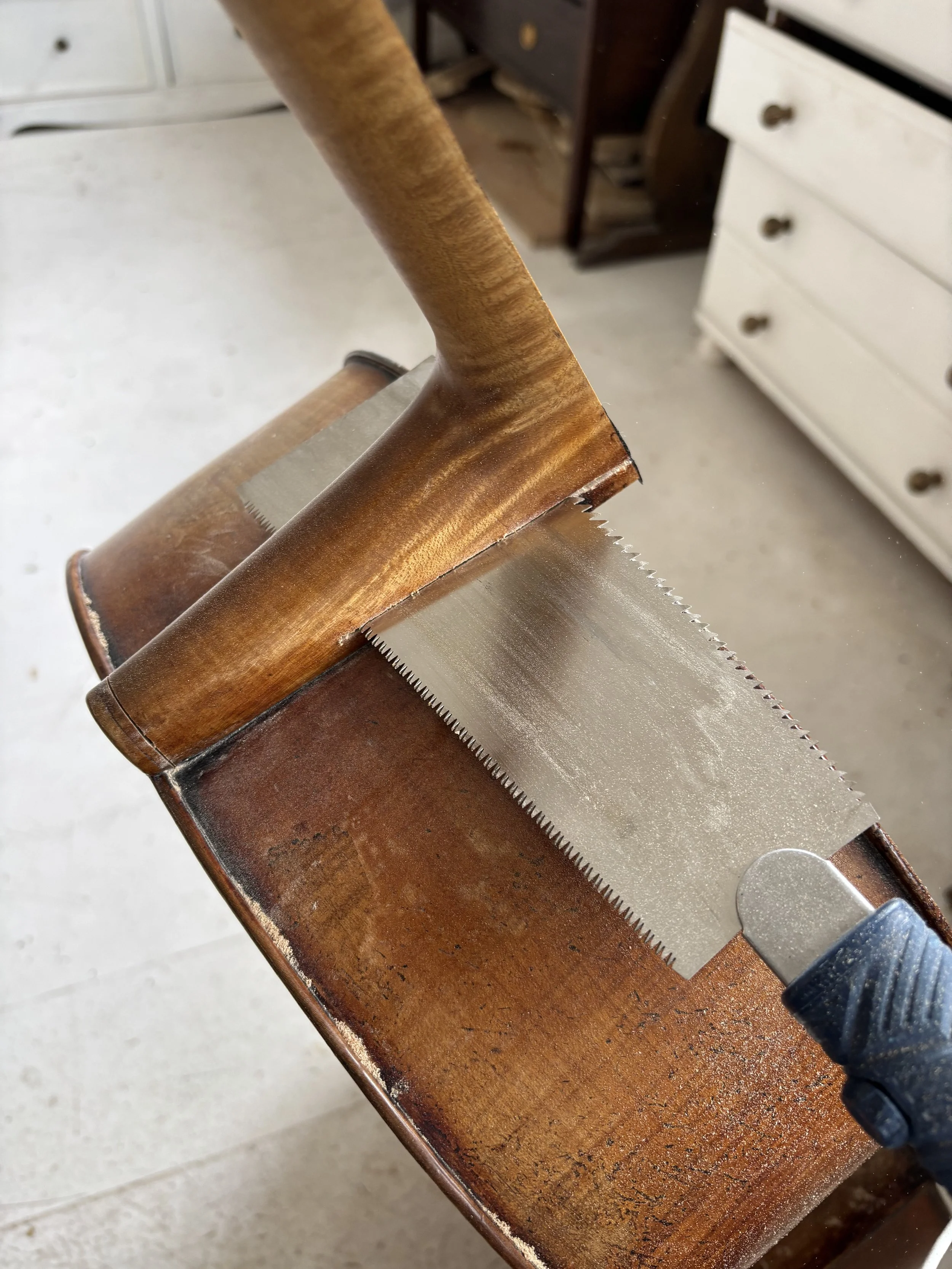
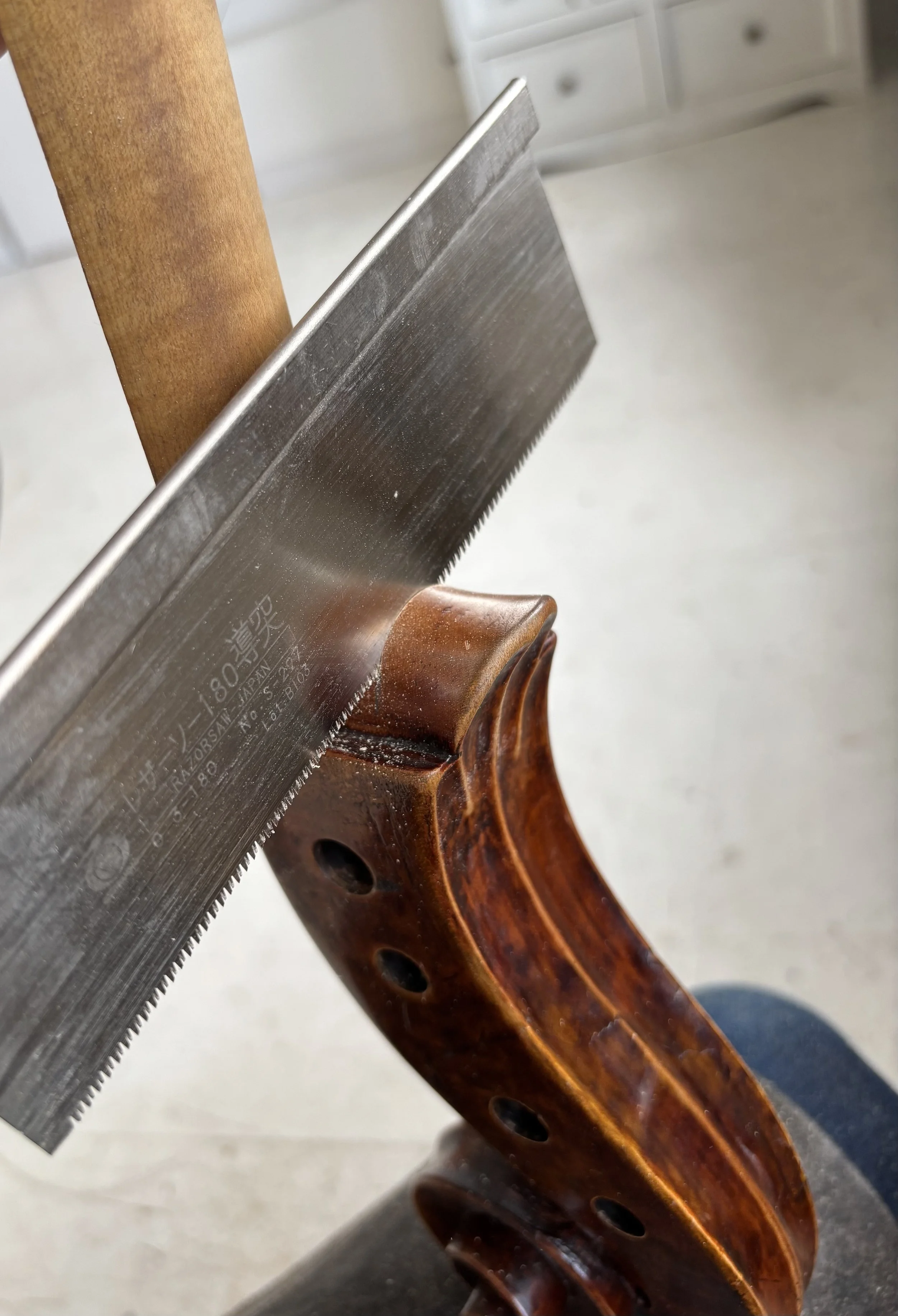
Preparing the scroll
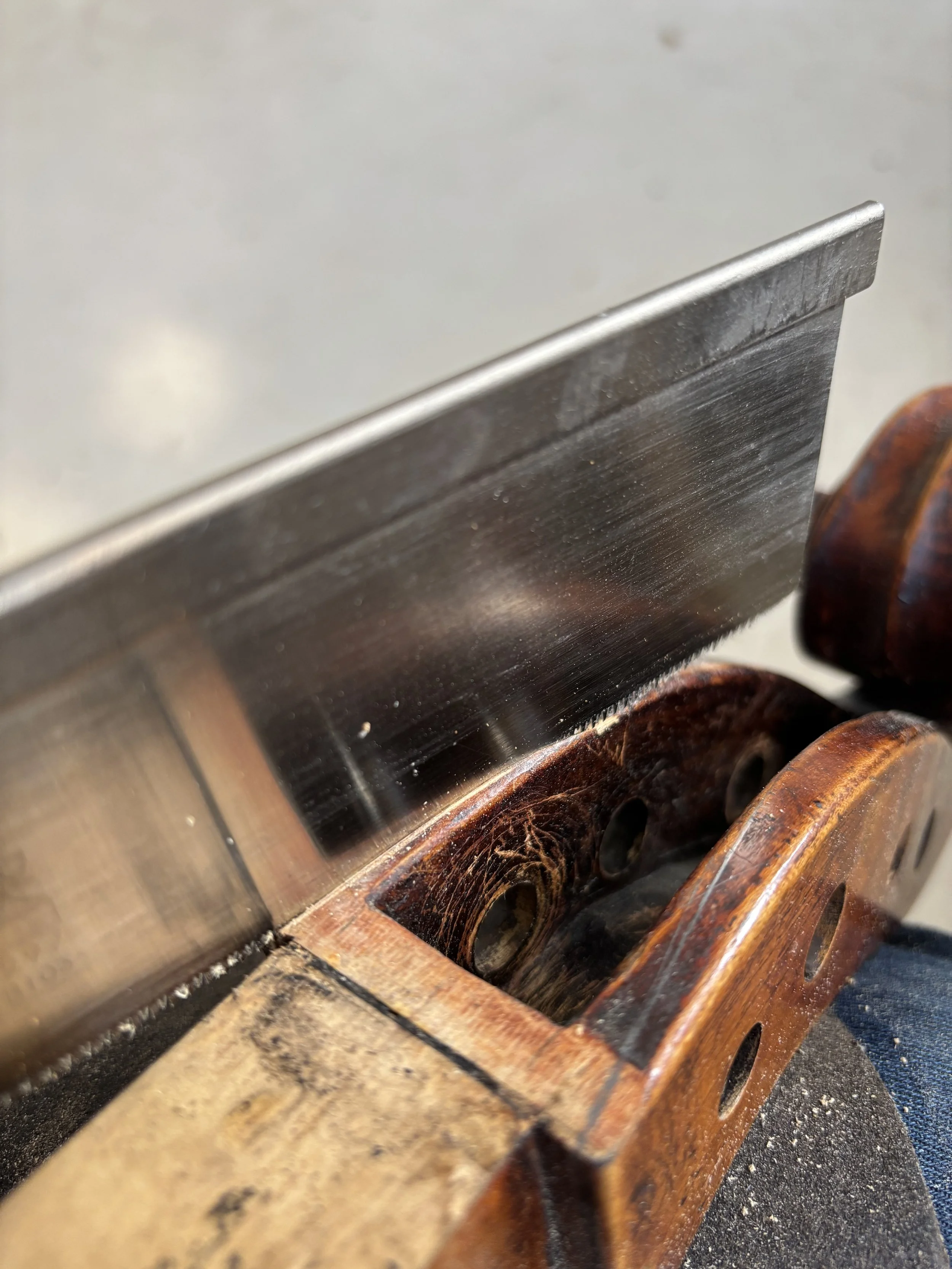
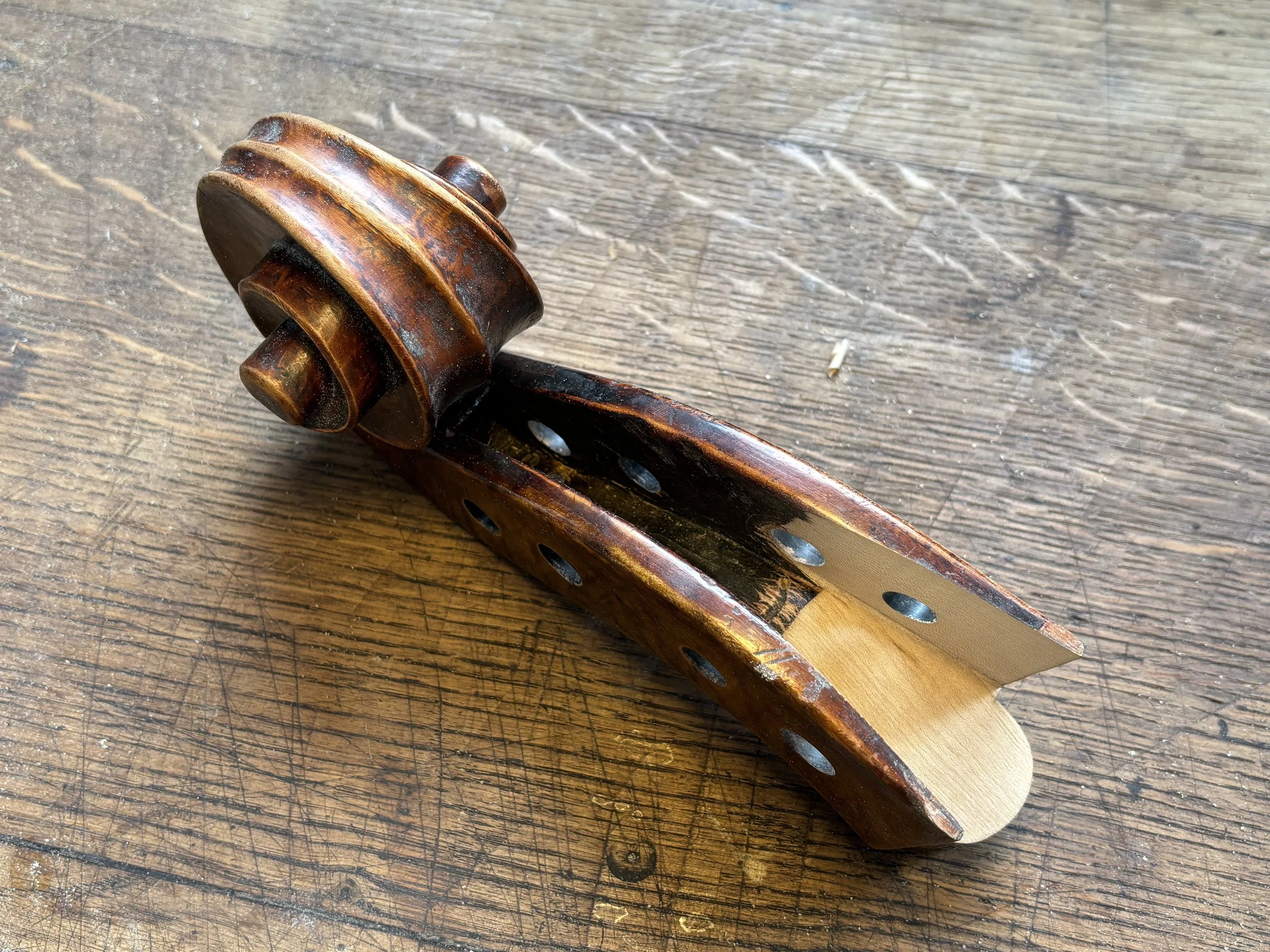
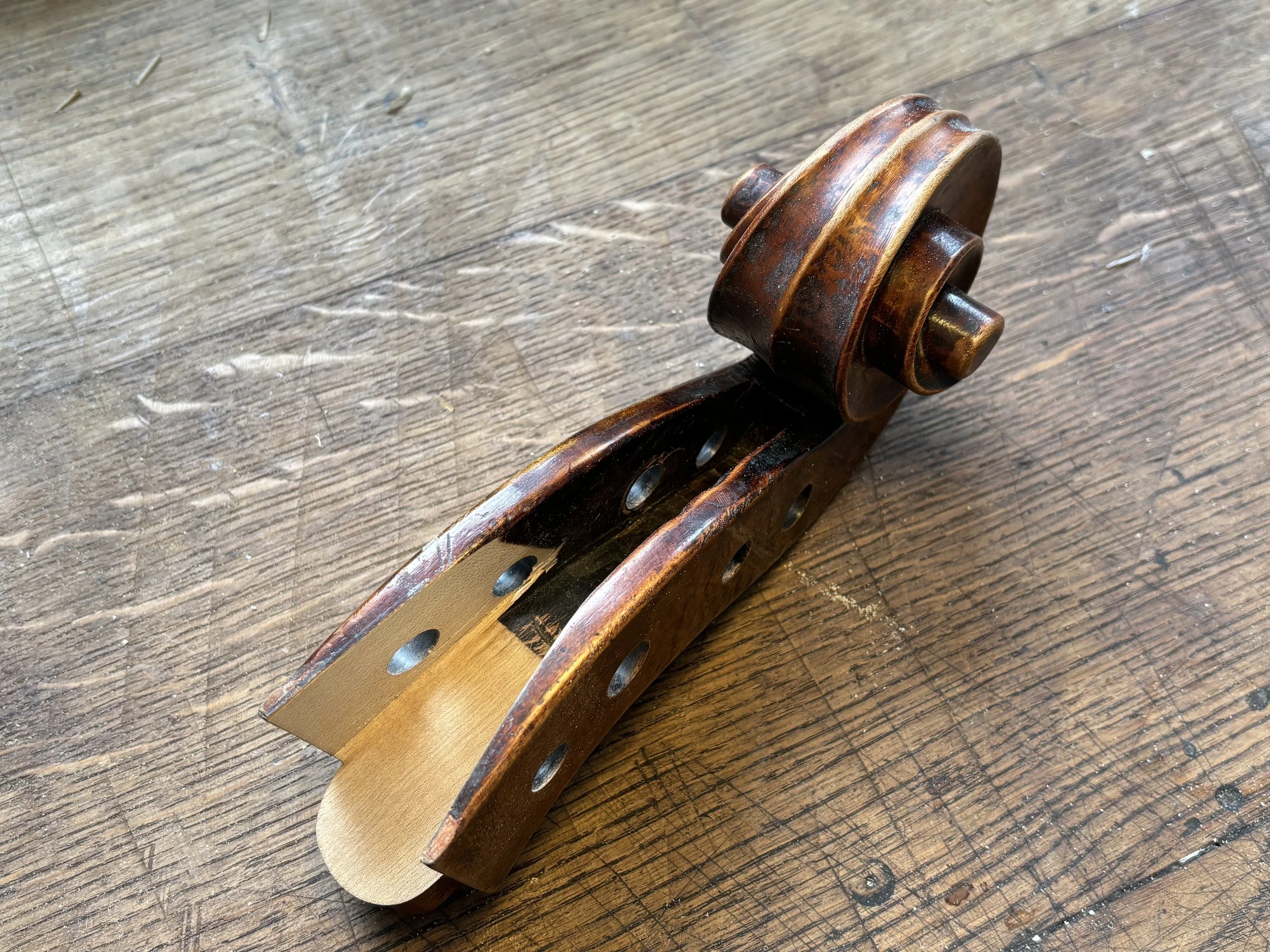
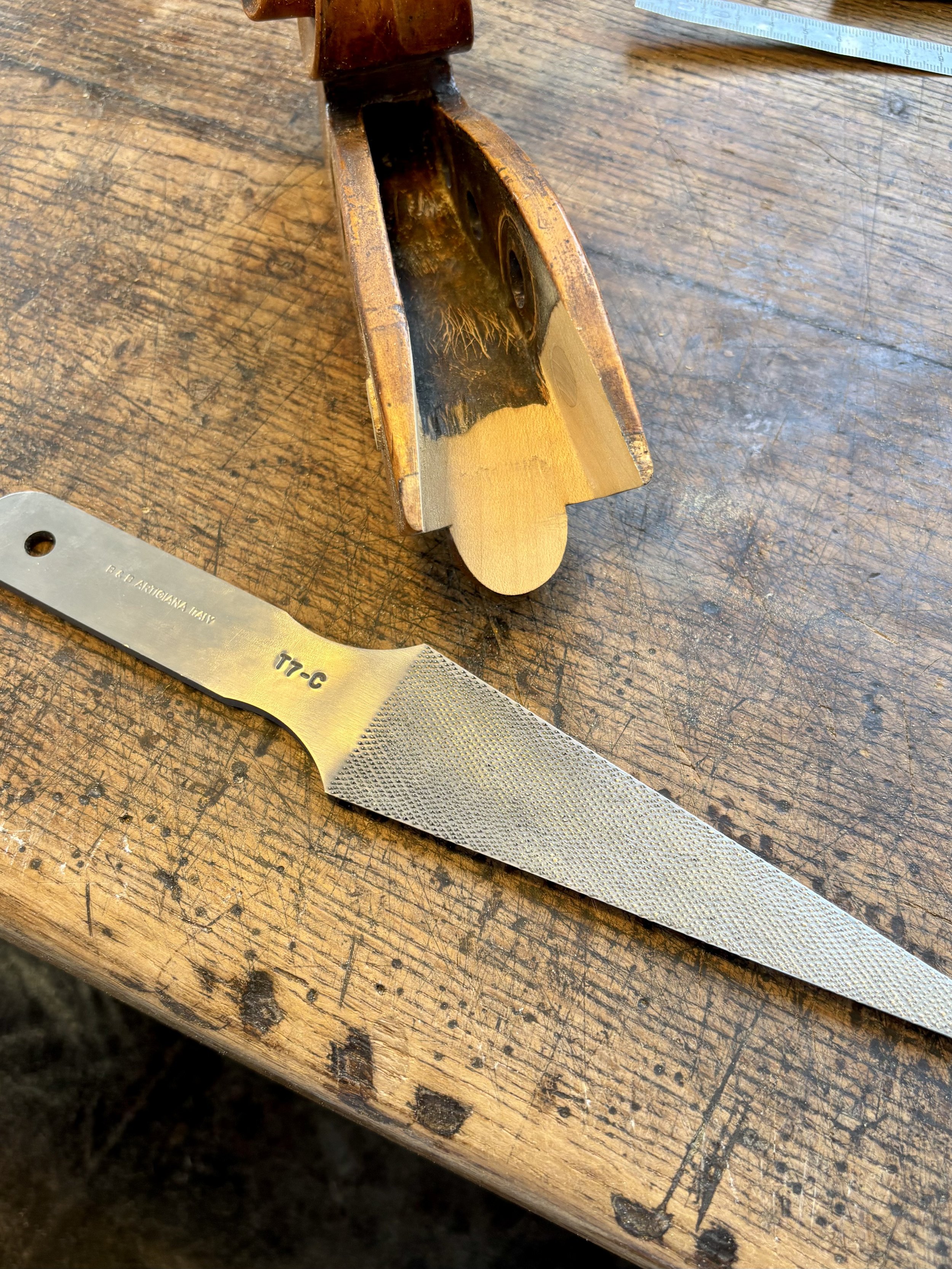
The inside of the pegbox is carefully prepared to receive the new graft. This is a particularly delicate stage of the restoration.
A series of accurately cut surfaces are made within the original pegbox. These need to be extremely clean and precise, providing sufficient gluing area whilst preserving as much of the original scroll as possible.
On an important antique cello, every cut needs to be considered before material is removed.
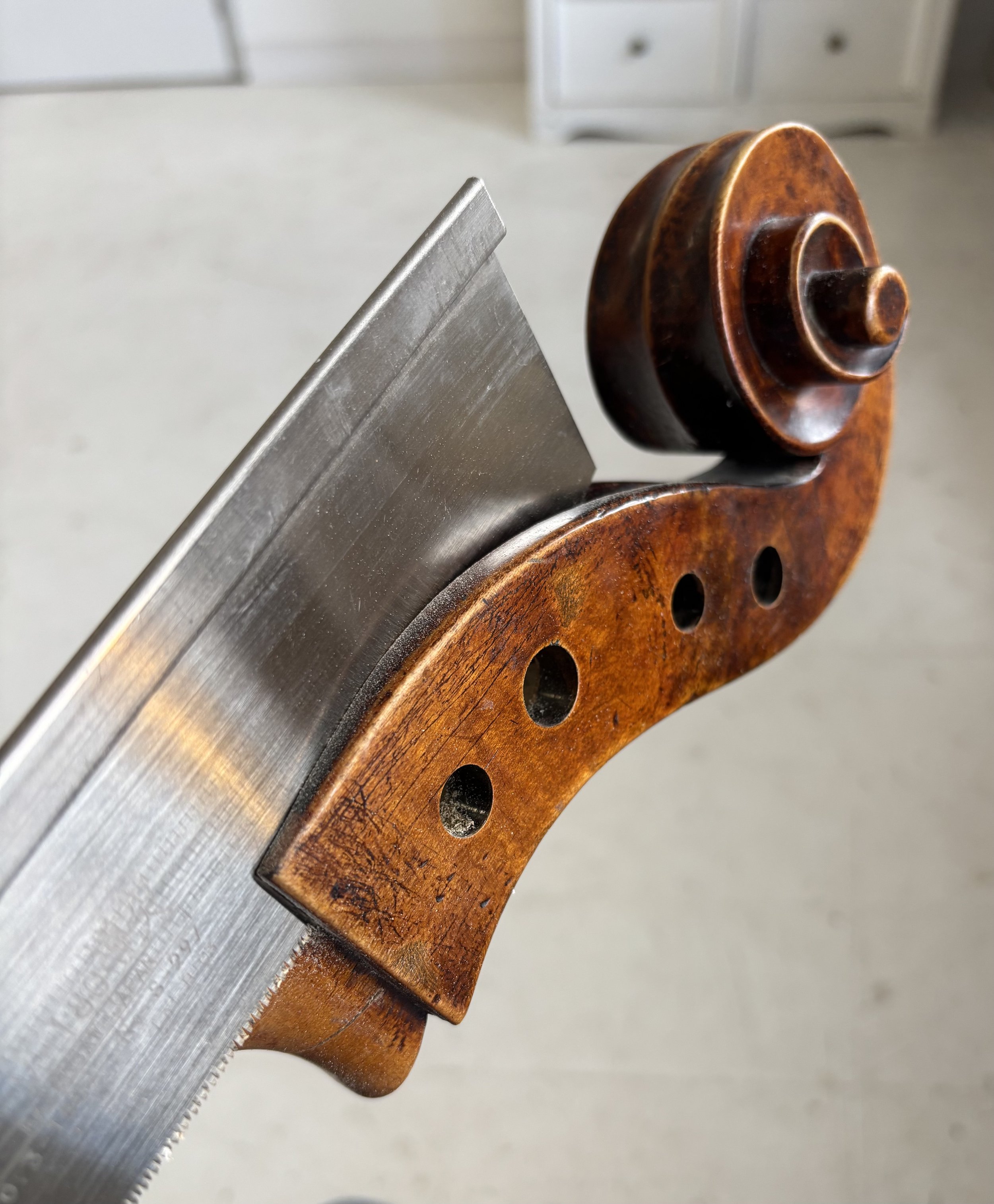
Selecting the new maple
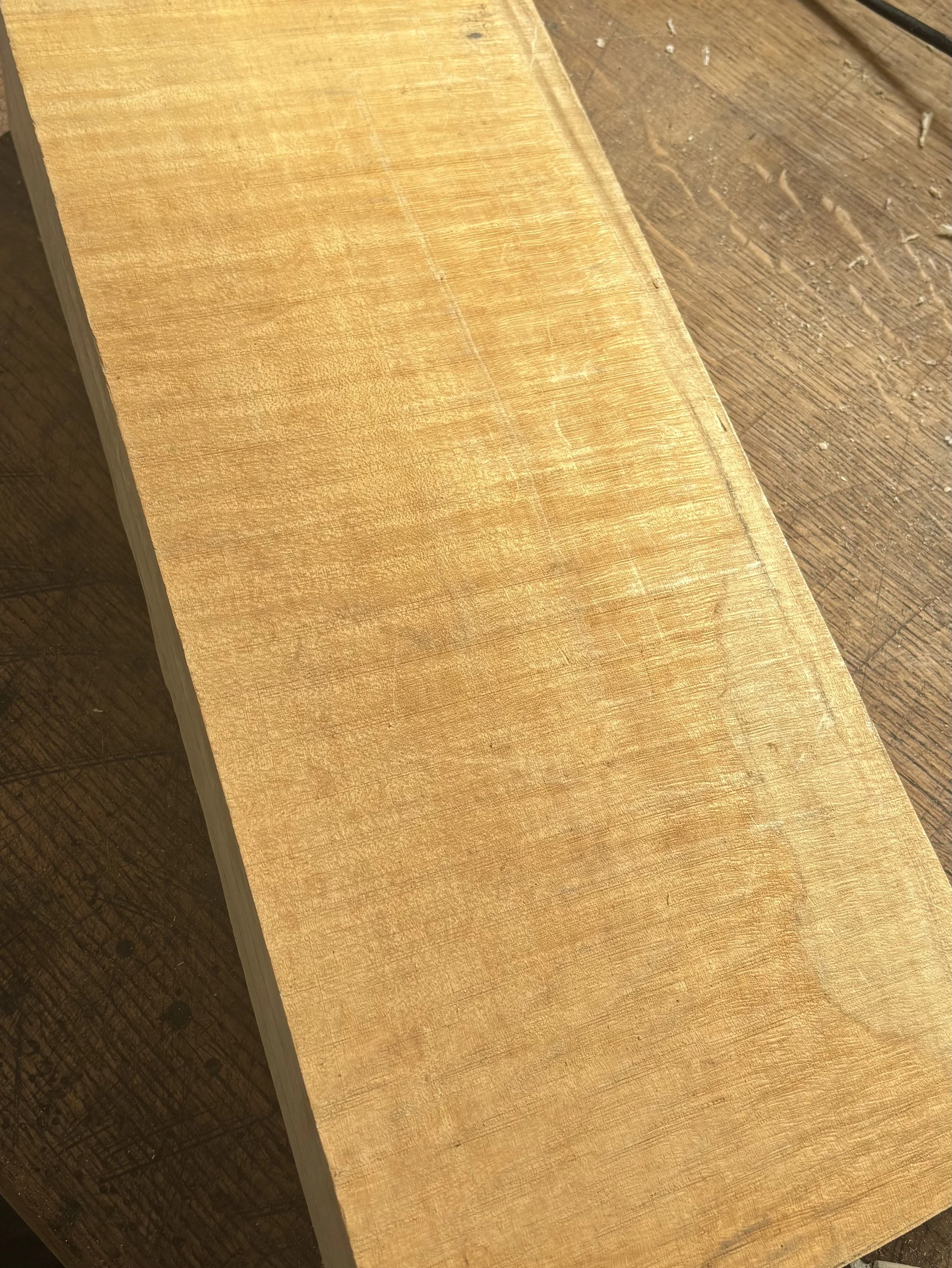
A new piece of maple is selected for the neck.
As well as choosing timber of appropriate quality and strength, we look for maple whose figure and appearance work sympathetically with the original cello.
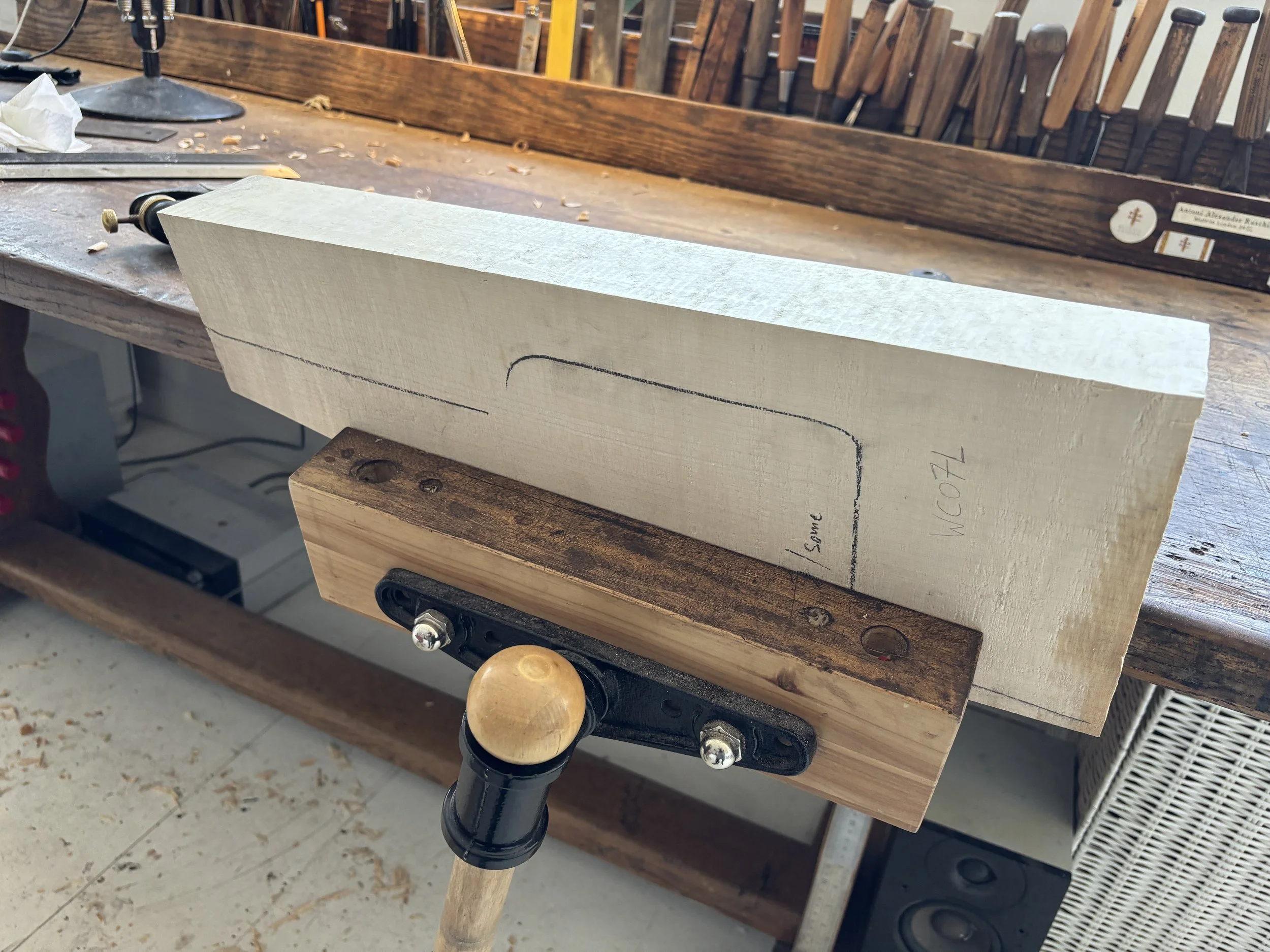
The graft begins as a considerably oversized block of wood.
It is gradually cut and shaped so that one end will fit precisely inside the prepared original pegbox, while the remaining wood will eventually become the new cello neck and heel.
Fitting the graft
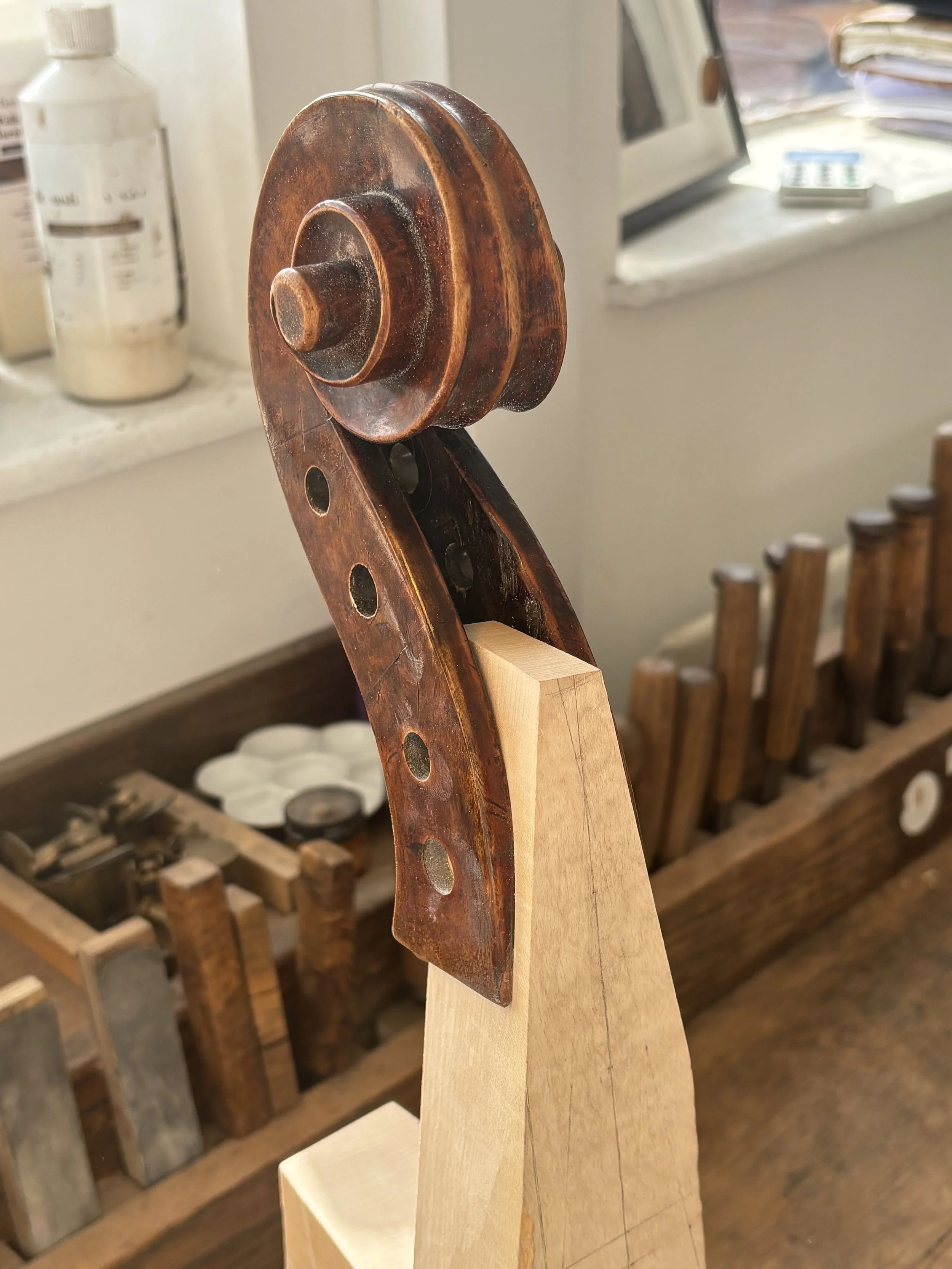
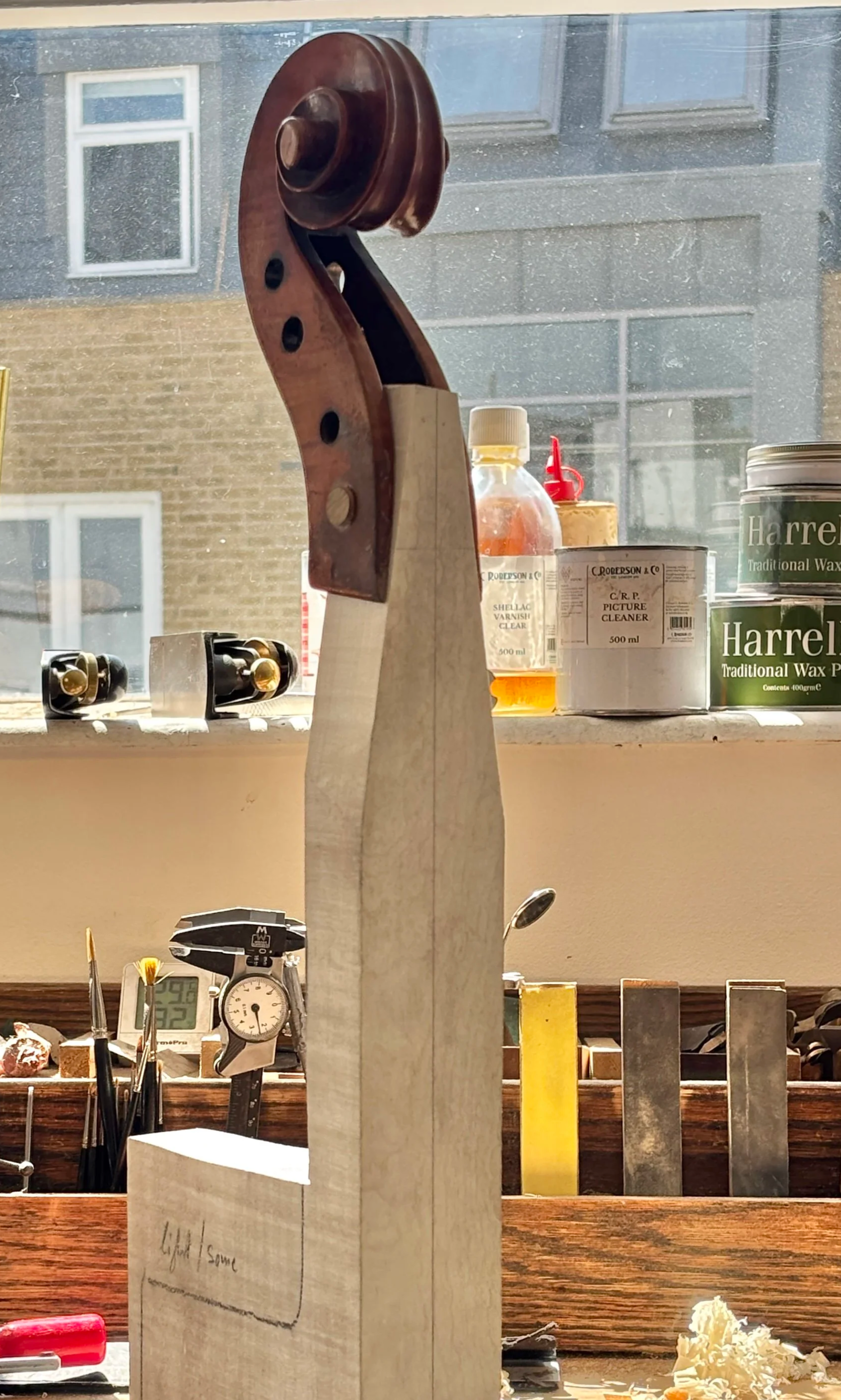
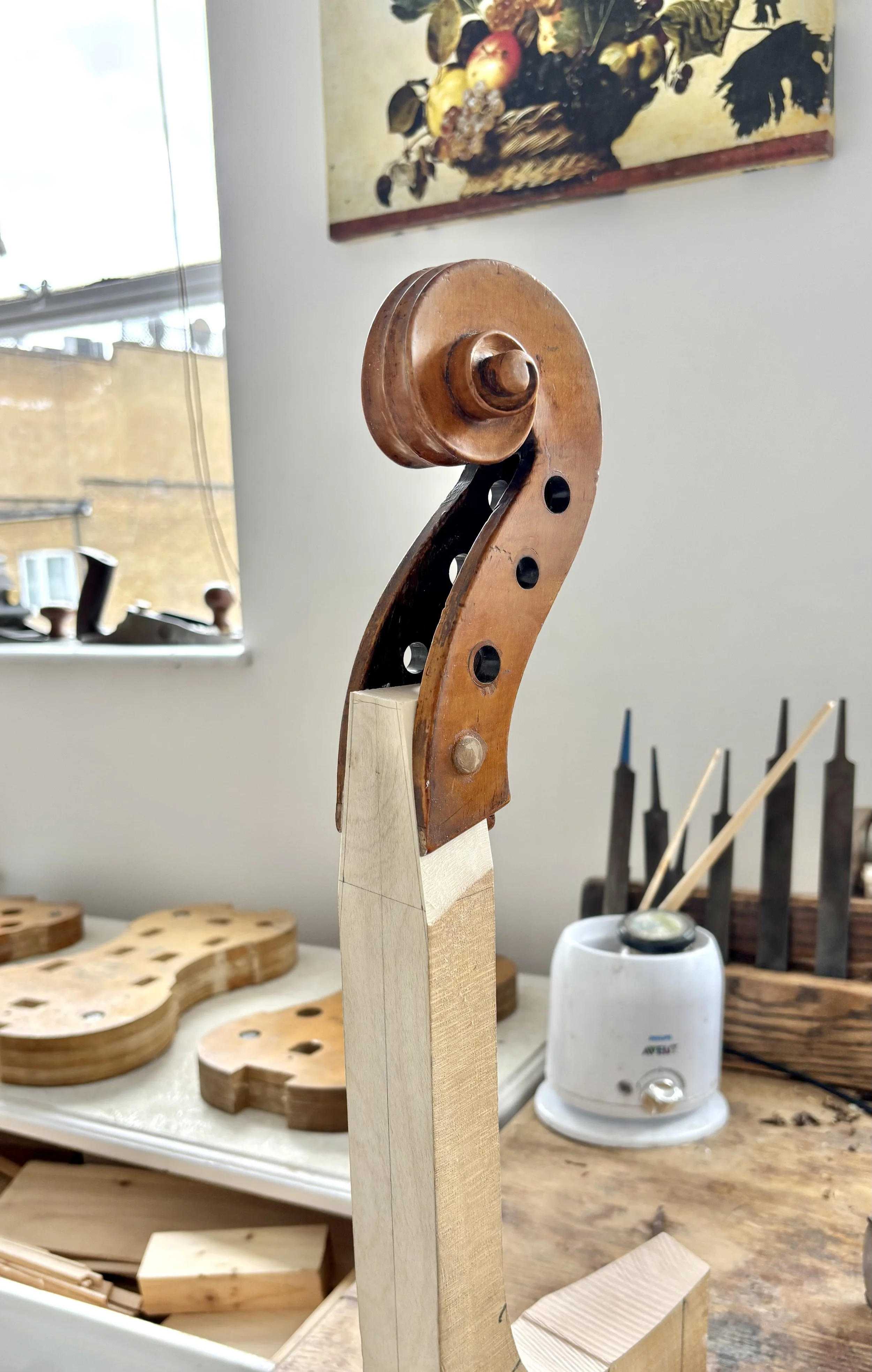
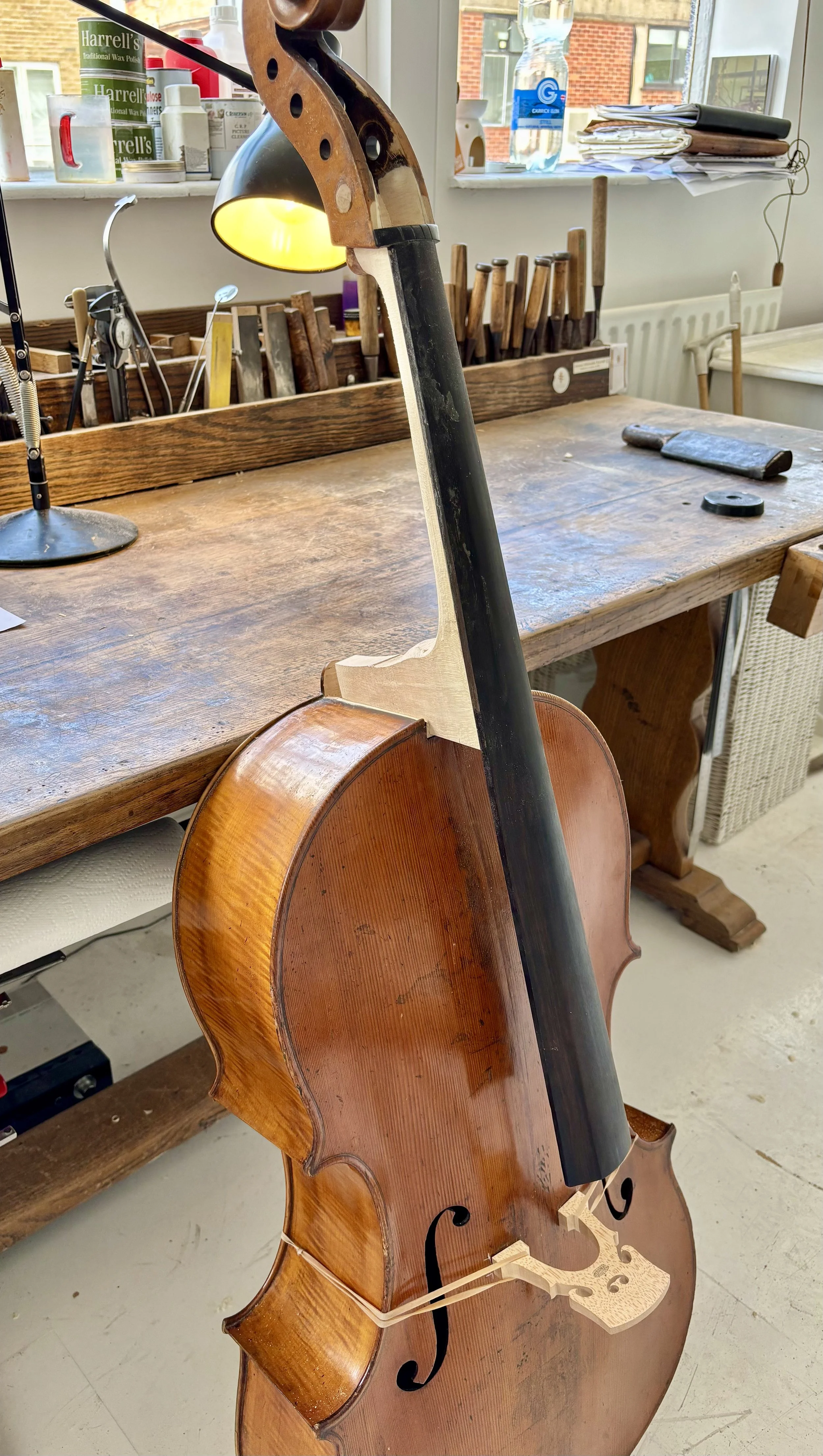
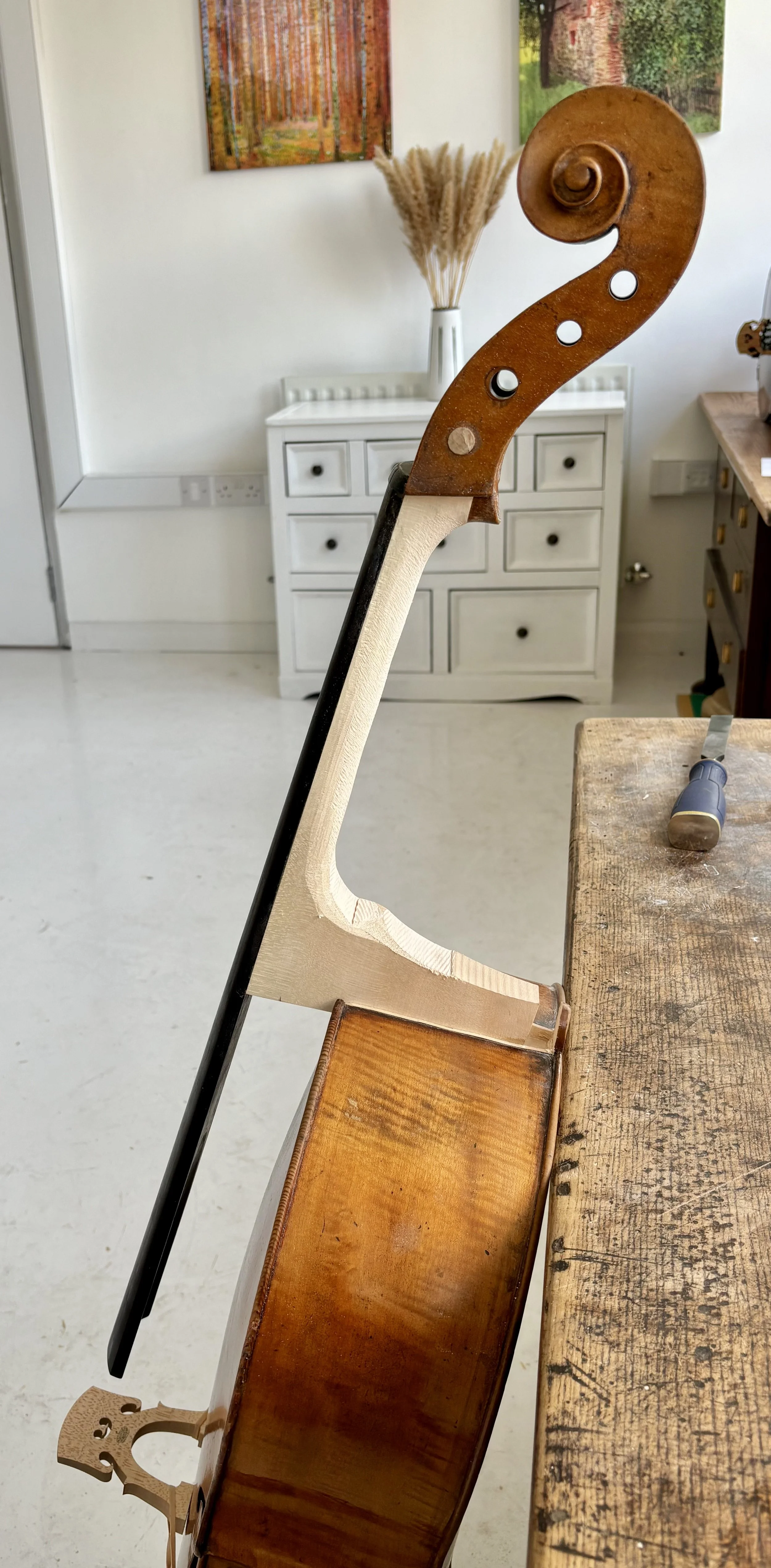
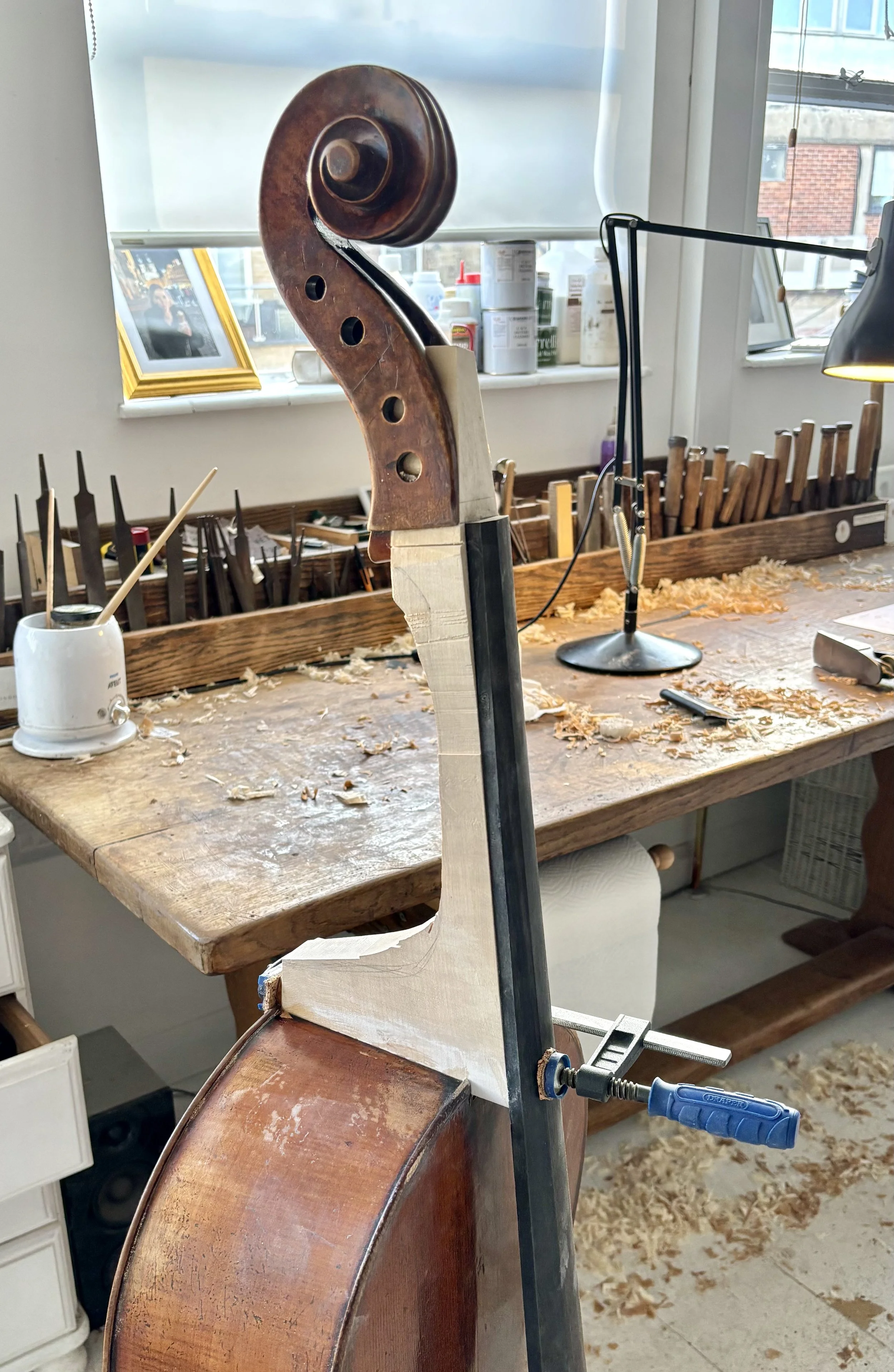
The new maple is fitted into the original scroll by hand.
The surfaces need to meet extremely accurately throughout the joint. There should be intimate contact between the old and new wood rather than relying on glue to compensate for an imperfect fit. This process is carried out gradually. Small quantities of wood are removed at a time until the graft reaches its correct position inside the pegbox and the fit is satisfactory on all of its surfaces.
Once complete, the graft can be glued into the original scroll. At this point the cello effectively has its original scroll attached to a completely new block of neck wood.
Setting the neck into the cello
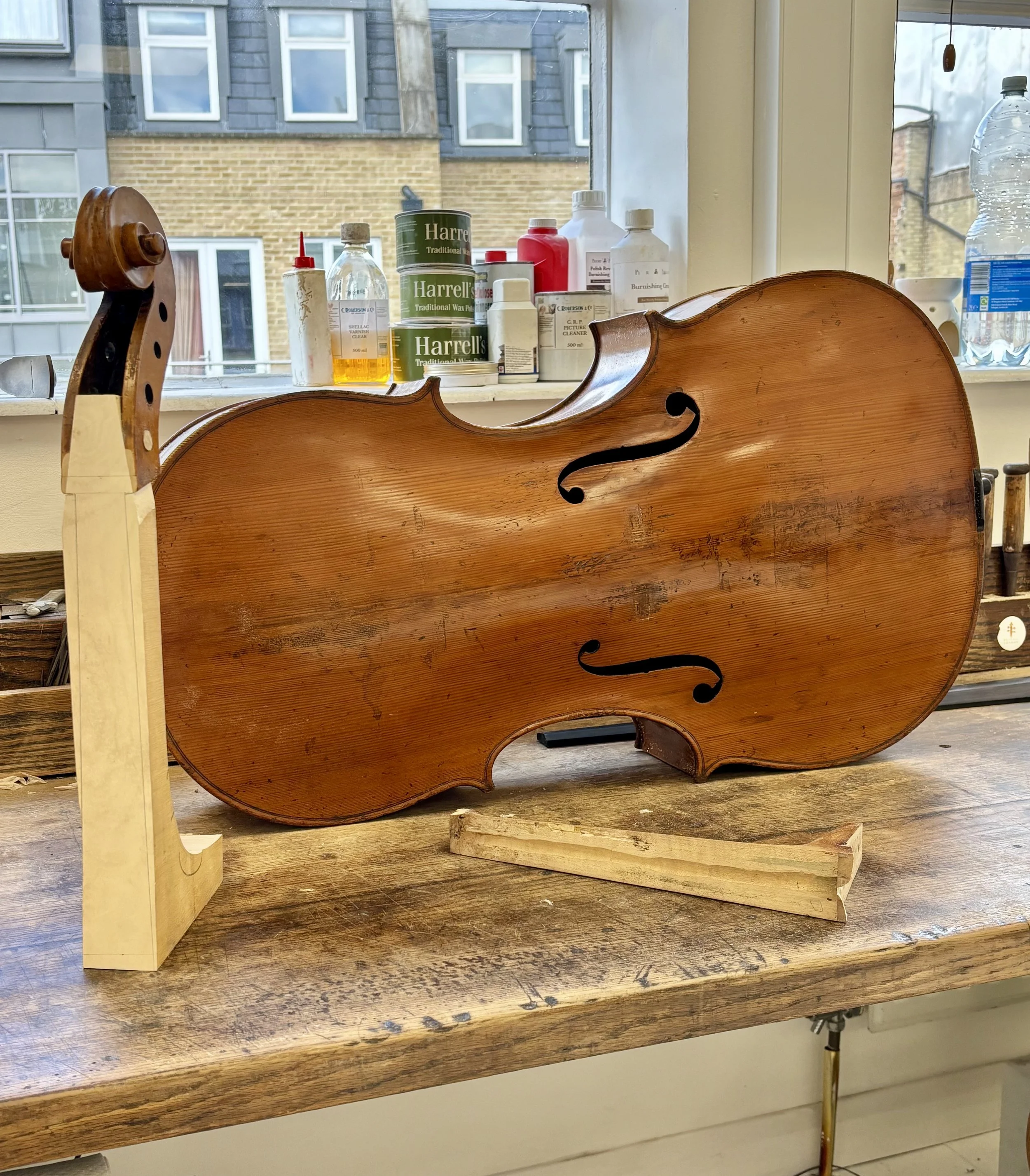
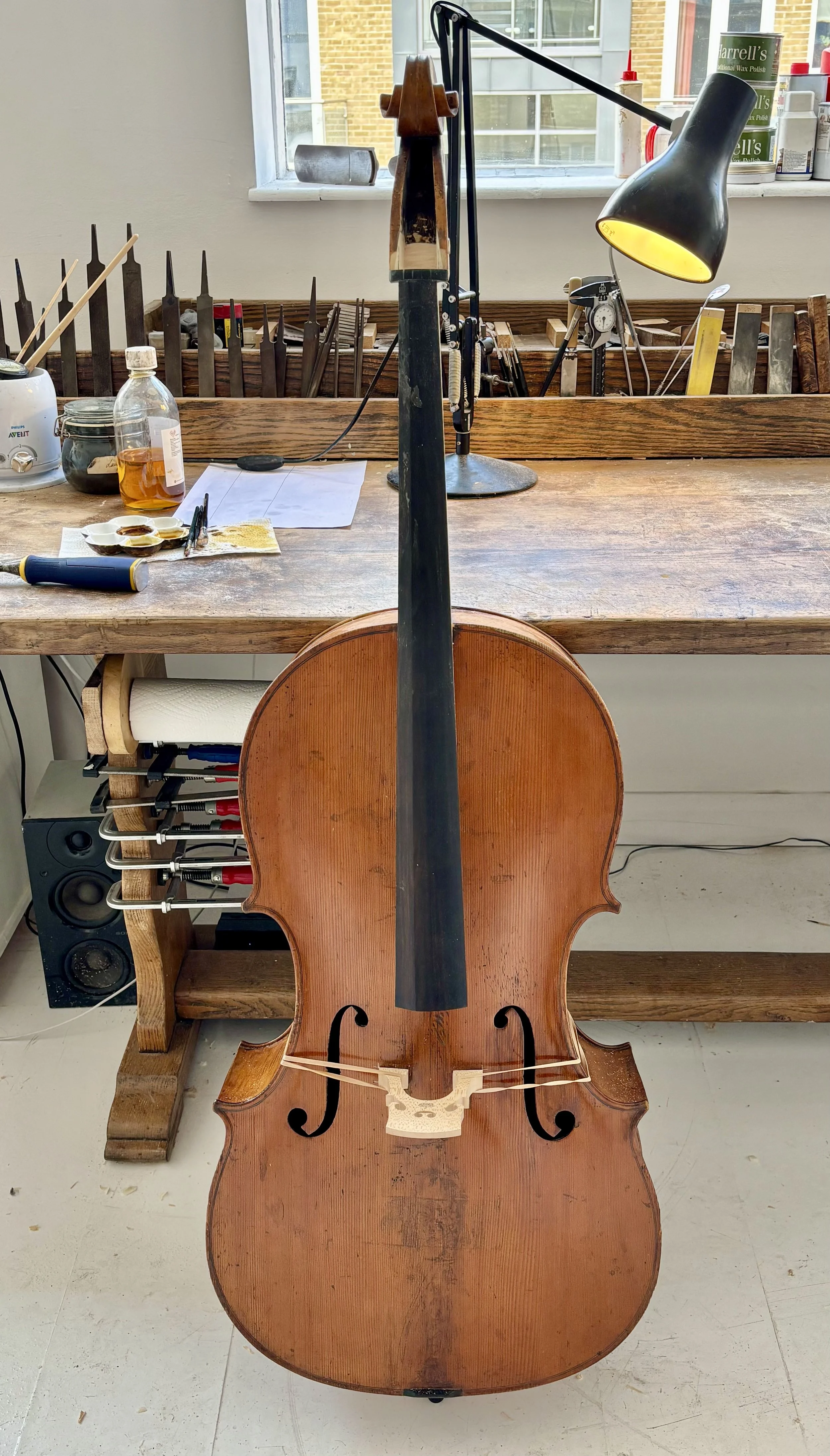
The newly grafted neck must then be fitted into the body. The neck mortice is prepared and the neck is gradually adjusted until its position is correct.
Several things have to work together:
Neck alignment
Fingerboard projection
Neck angle
Overstand
Centre line
Relationship with the bridge
Comfortable playing dimensions
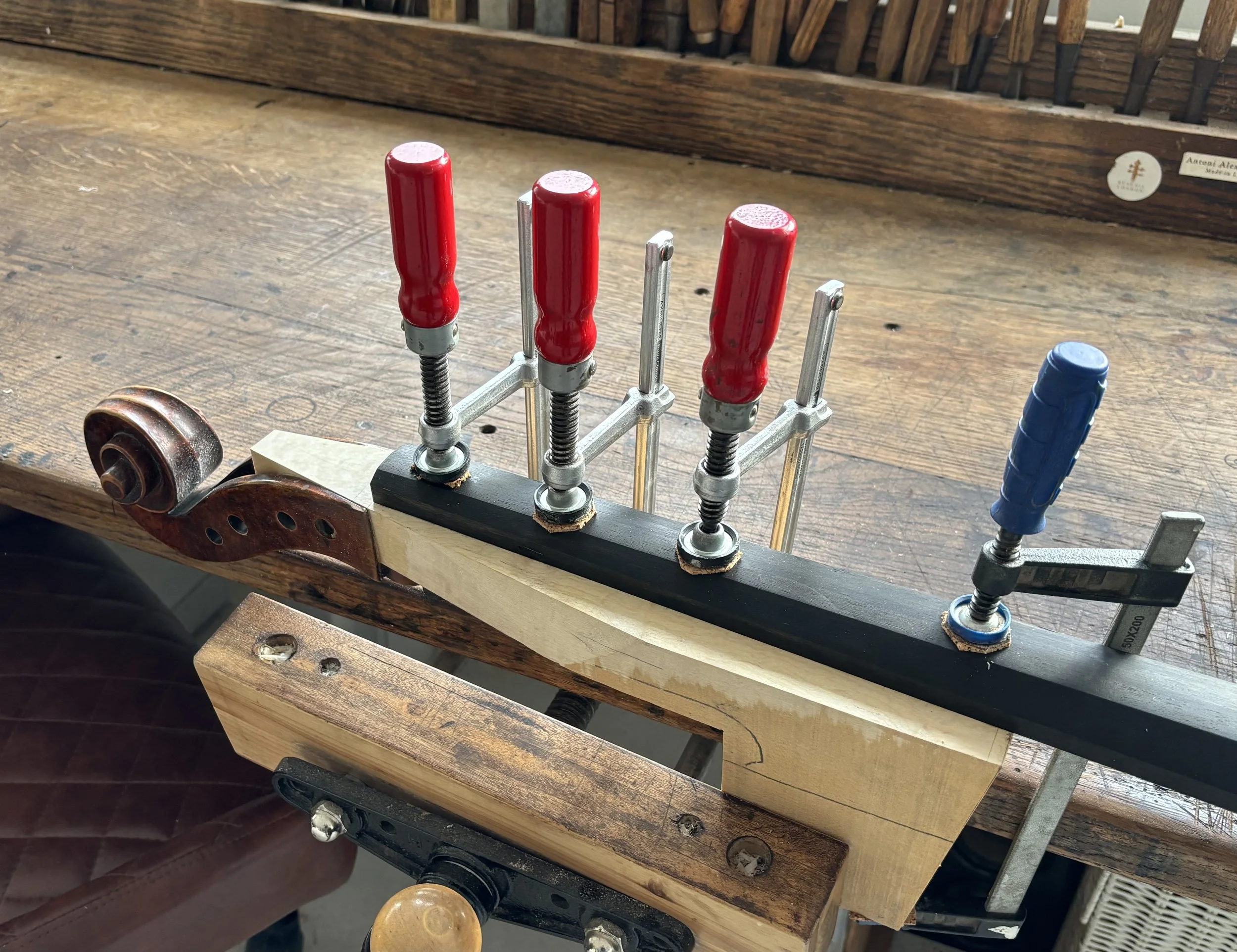
These measurements have an important effect not only on playability but on the eventual set-up and response of the cello. The fitting therefore needs to be both structurally secure and extremely accurate.When everything is correct, the neck is glued permanently into the cello.
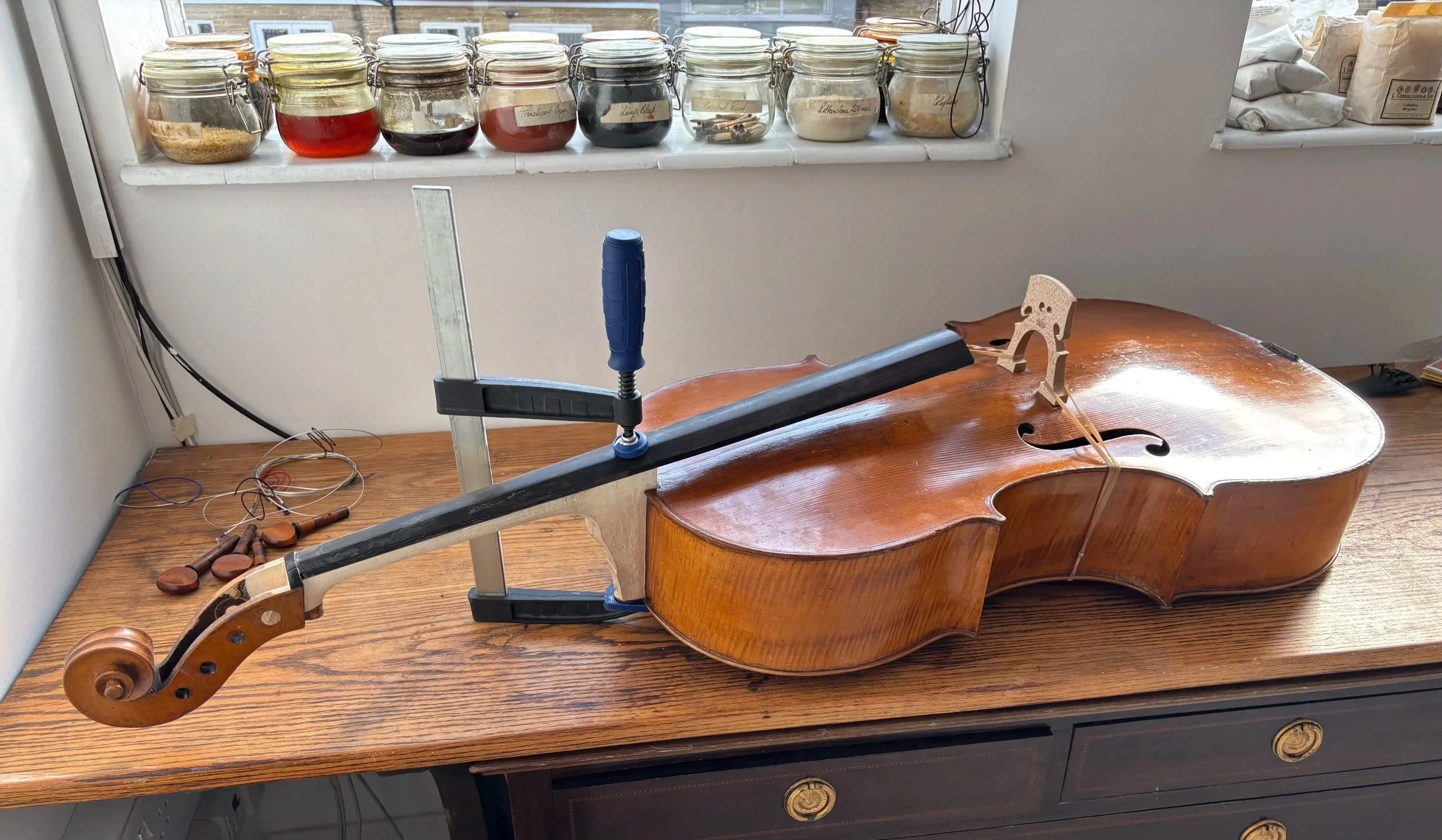
Carving the new cello neck
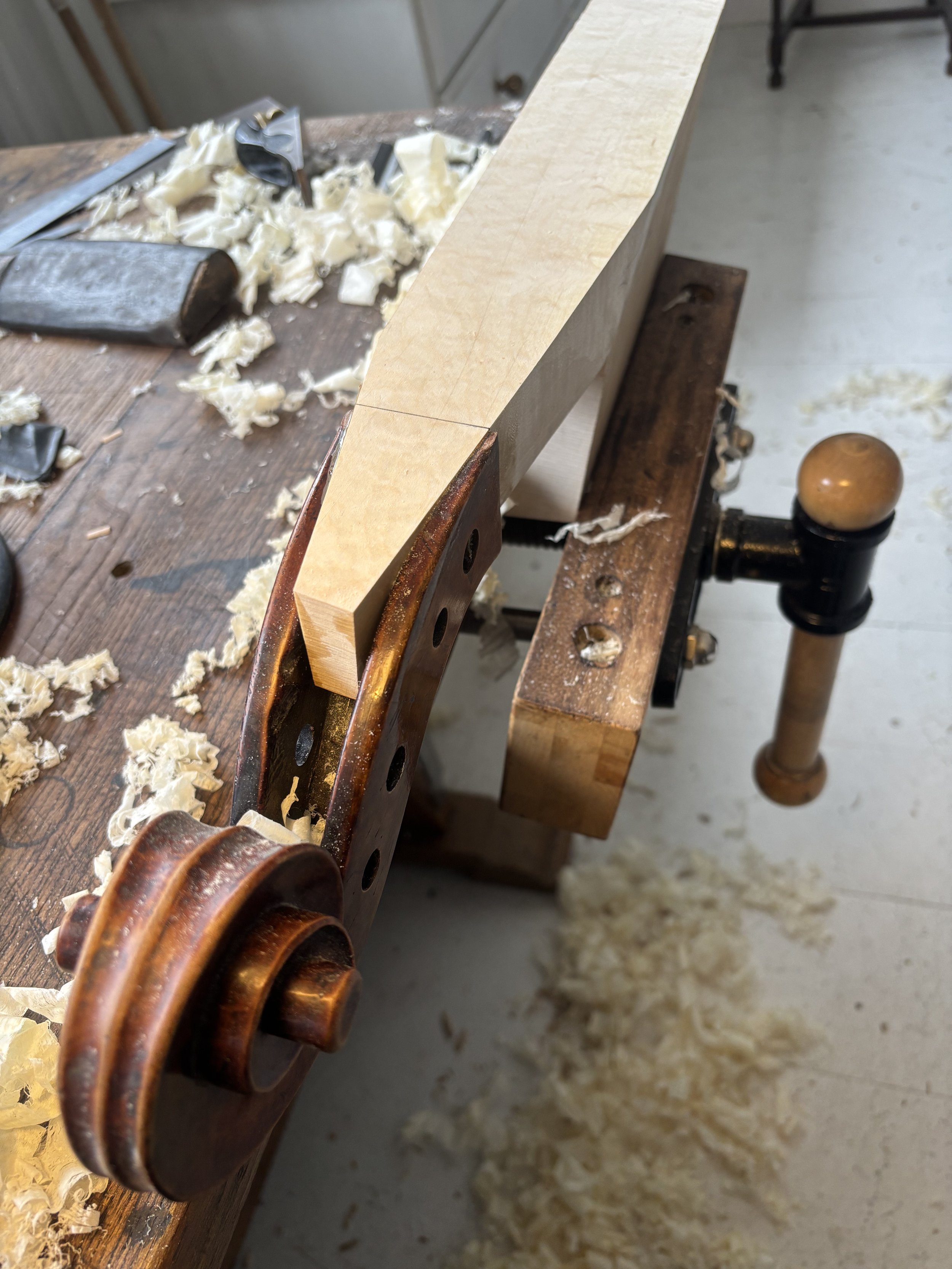
Much of the excess maple is removed before the neck is fitted into the cello. The neck is carved progressively, establishing its width, thickness and profile whilst leaving sufficient material for final adjustment once it has been fitted to the body.
For a player, the shape of the neck is enormously important. Even relatively small differences can affect the way the cello feels in the hand, particularly for a professional musician who spends many hours with the instrument.
Where appropriate, the dimensions and feeling of a familiar existing neck can therefore be taken into consideration during the restoration.
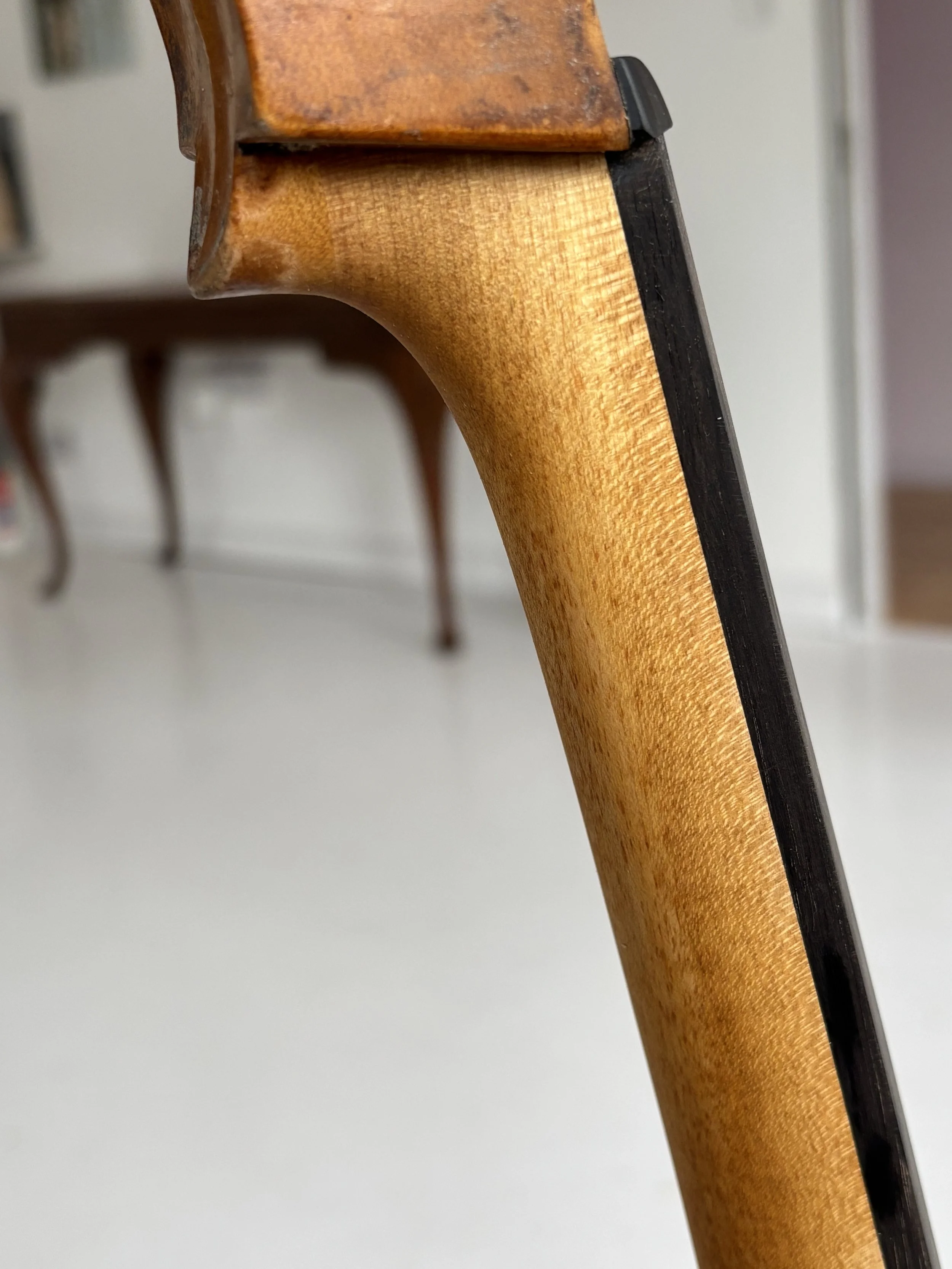
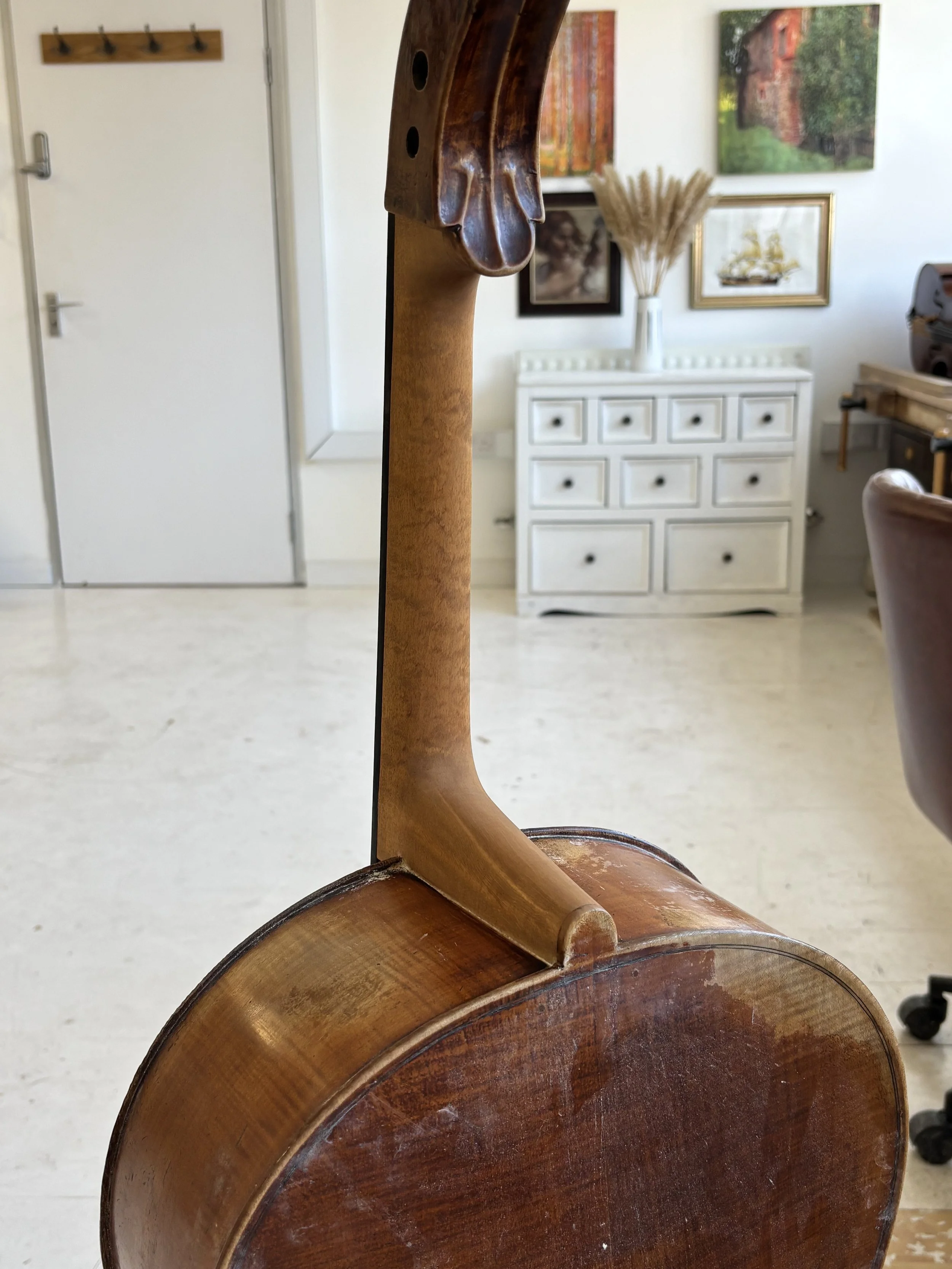
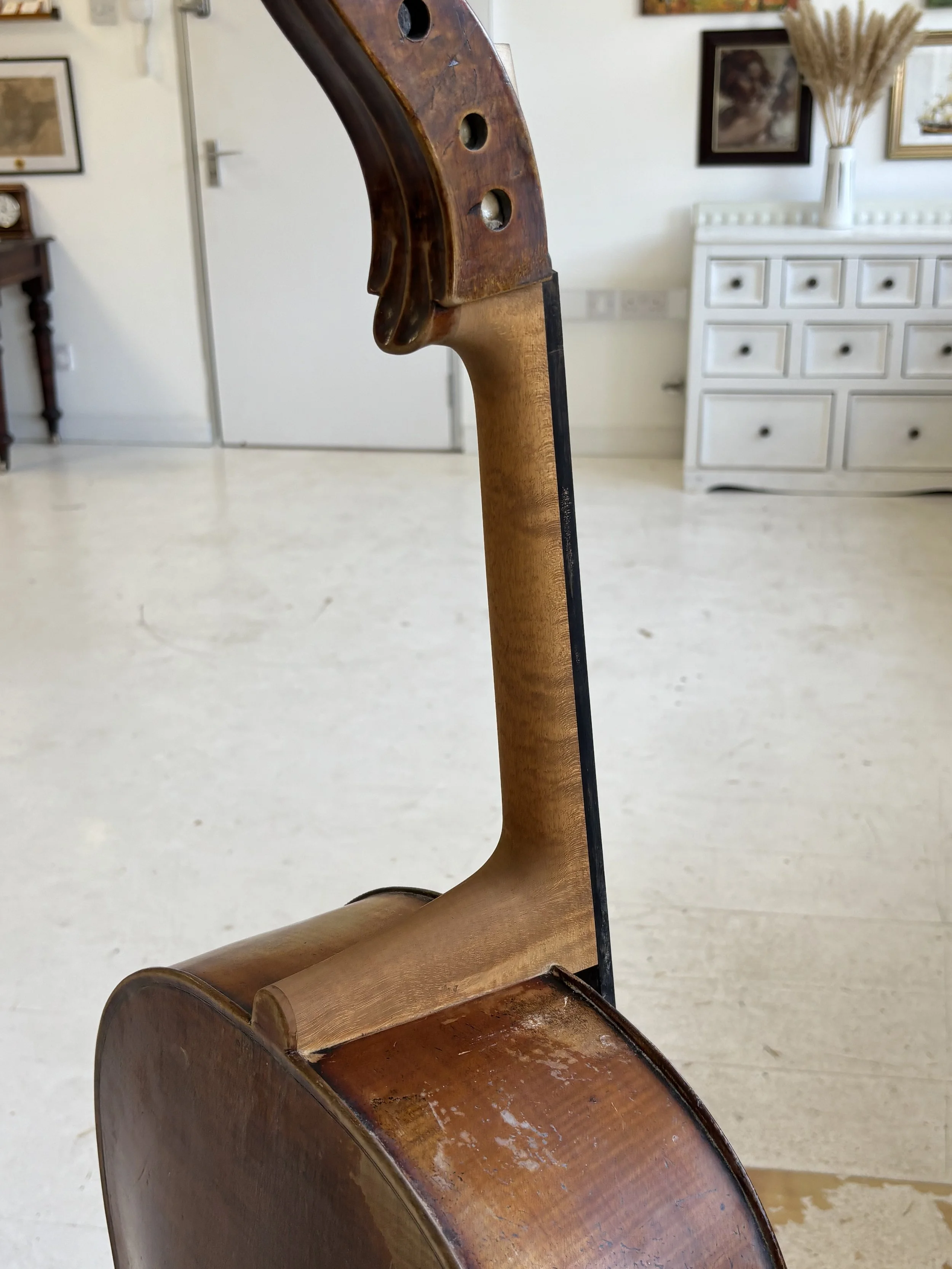
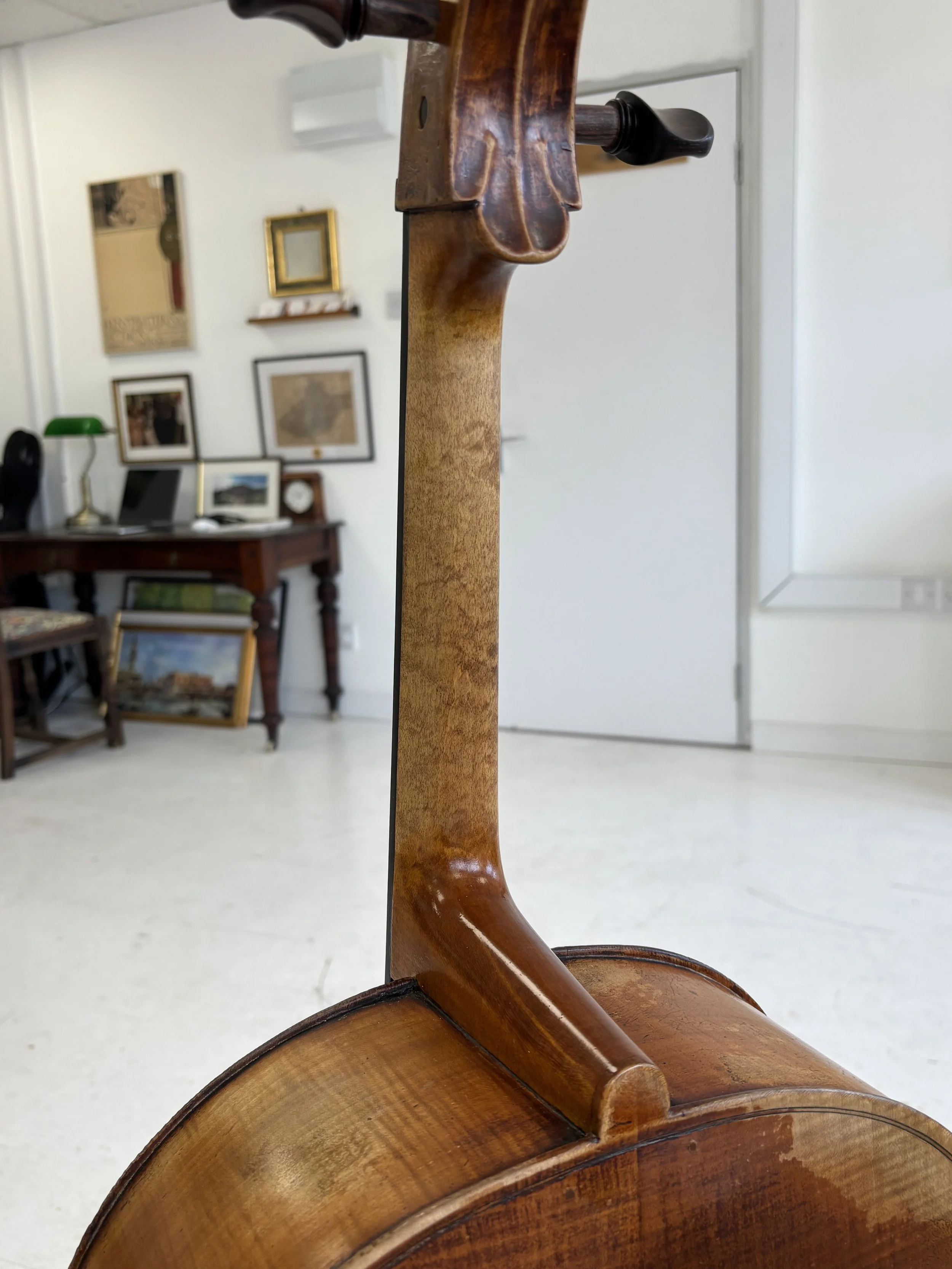
Finishing and retouching the new neck
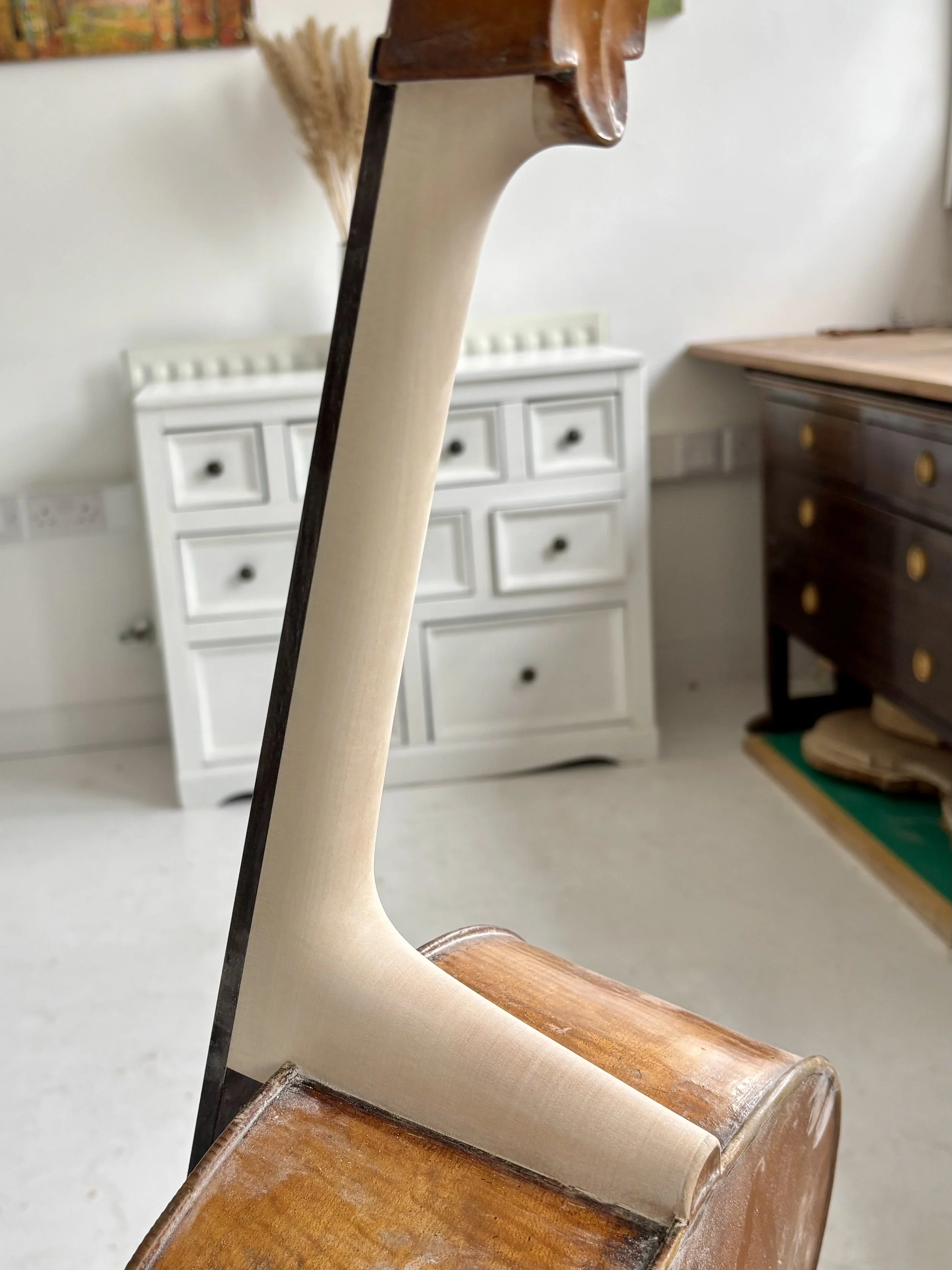
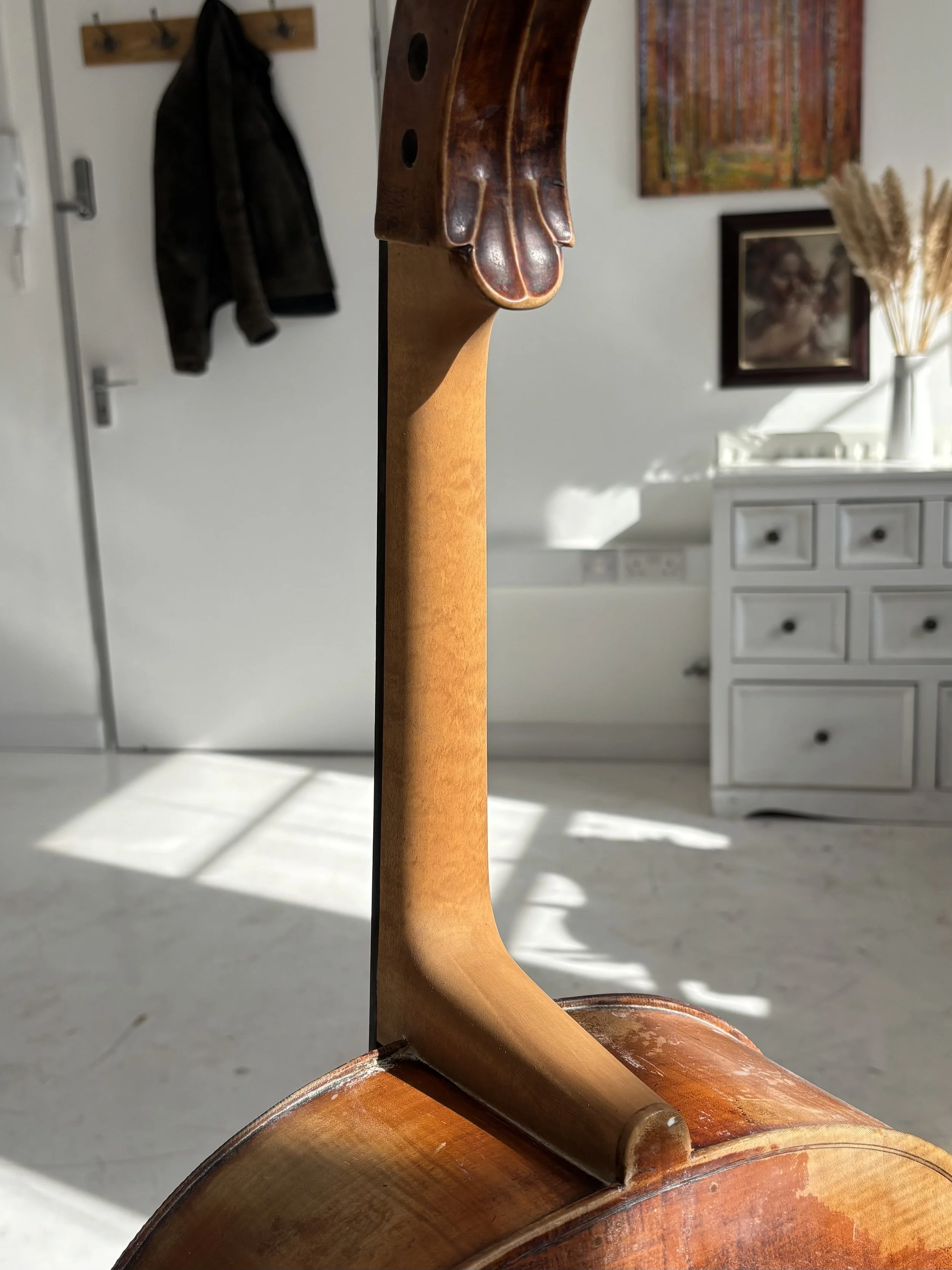
Once fitted, the neck receives its final shaping and finishing.
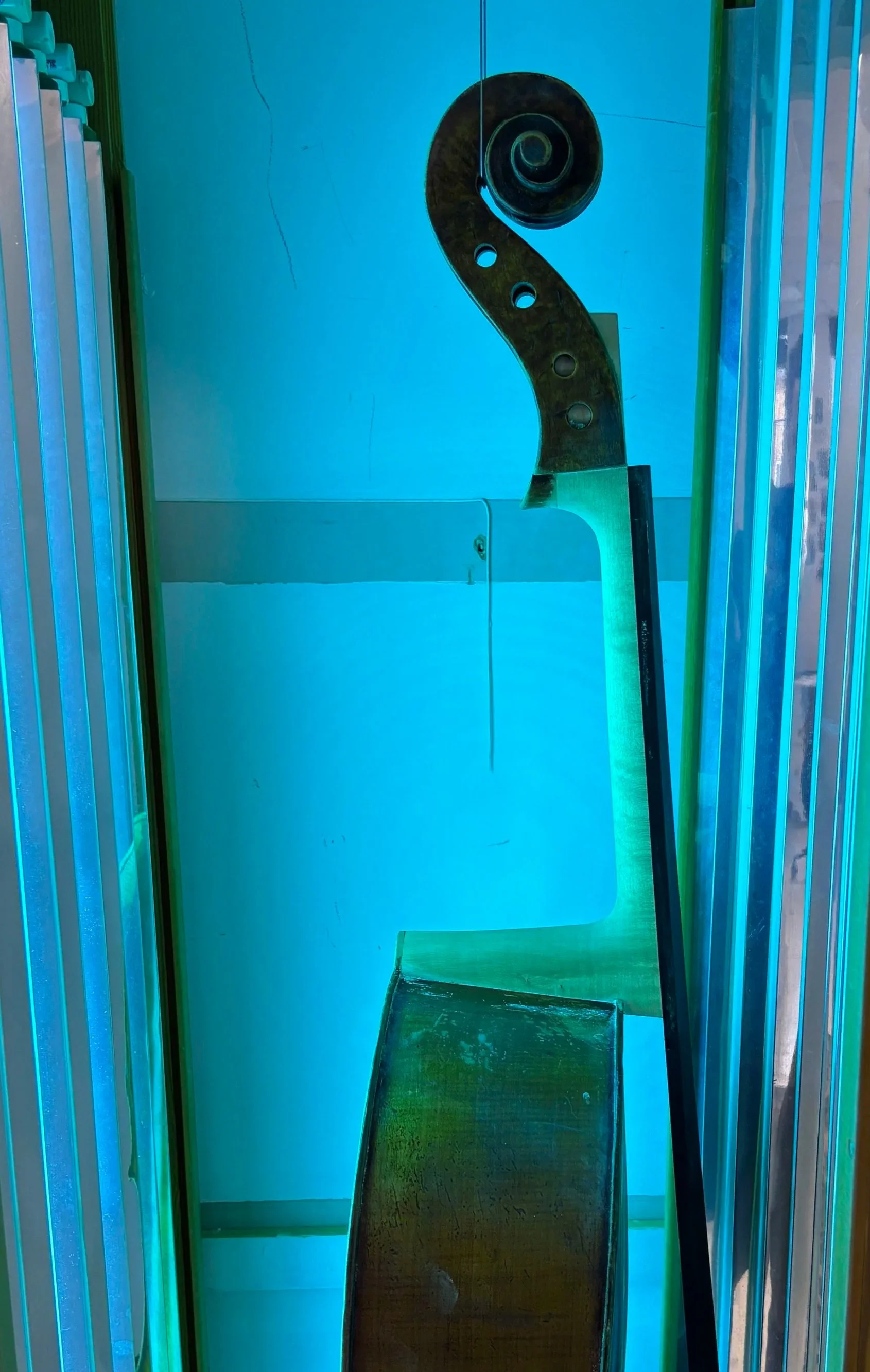
The transition between the original scroll and the new maple is refined and the newly exposed wood around the graft is carefully retouched.
On an old instrument, the intention is not for the new work to draw attention to itself.
Colour and texture can be built up sympathetically so that the restoration sits naturally beside the old wood and varnish while the original work of the maker remains clearly respected.
A particularly fine neck graft can be remarkably discreet.
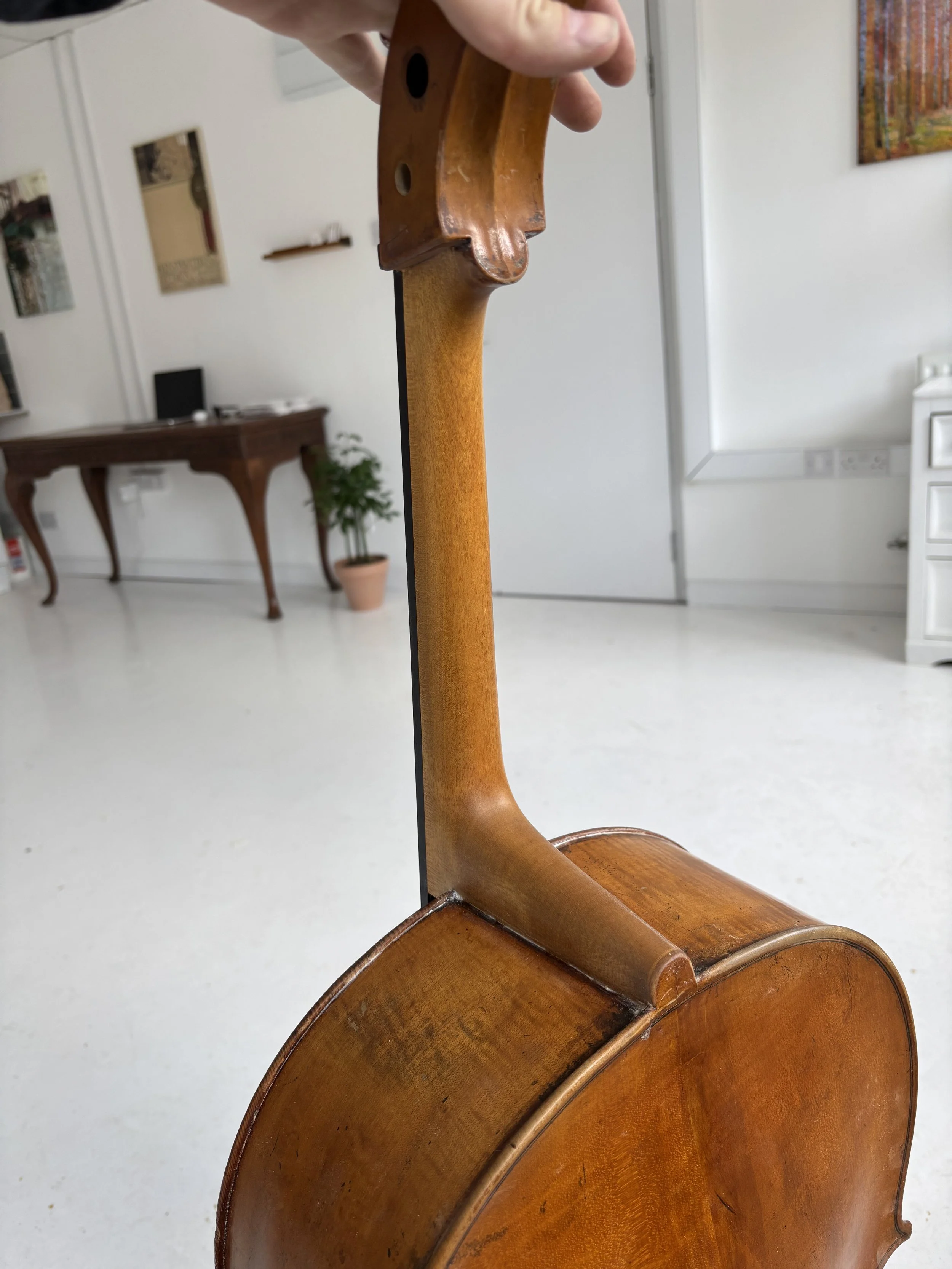
Does a neck graft affect the sound of a cello?
The purpose of a neck graft is first and foremost structural and dimensional, but the way a cello neck is fitted forms an important part of the instrument's overall set-up. The height and position of the fingerboard determine the bridge geometry, while the neck angle and projection influence the relationship between the strings, bridge and body.
For this reason, considerable care is taken when establishing the new neck position. After a major restoration such as this, the bridge, soundpost, fingerboard and general set-up should also be assessed to make sure that the cello is working as well as possible.
A successful graft should ultimately leave the player thinking very little about the repair itself. I can improve the cello significantly also. The cello should simply feel secure, comfortable and natural to play.
Neck grafts on antique cellos
Seeing a neck graft on an old cello is very common. Many important instruments by the great Italian, English, French and German makers have received neck grafts during their working lives. It is even quite rare for old instruments to not have a neck graft.
Cellos are functional works of art which have often been played continuously for hundreds of years. Components wear, accidents happen and standards of set-up change.
The aim of good restoration is therefore not to make an old cello artificially new. It is to preserve the work and character of the original maker while making the minimum necessary intervention to allow the instrument to continue fulfilling its purpose as a musical instrument.
A carefully executed neck graft is a particularly good example of this philosophy: retaining the maker's original scroll while giving the cello a strong, accurately fitted and beautifully shaped neck with which it can continue its working life.